Fluxpower Technology
Products by Equipment Type
Keep freight moving through terminals, cross docks, and distribution hubs with lithium-ion built for around-the-clock operations. Electrify your Class I, II, and III forklifts to reduce battery changes and refueling downtime, cut emissions, and gain real-time visibility across every site.

AT A GLANCE
Flux Power lithium ion forklift batteries help ports, terminals, and logistics operators keep Class I, II, and III forklifts running 24/7. The LiFePO4 batteries support opportunity charging during breaks, require no watering, operate from -22°F to 131°F, and produce zero tailpipe emissions in electric forklifts. SkyEMS adds real time monitoring of battery health and usage across shifts and sites.
Ports and logistics operations face vessel surges, tight truck appointment windows, around the clock schedules, and growing pressure to reduce emissions. Flux Power lithium ion solutions help operators keep freight moving through every dock door, maintain equipment across multiple sites, and control the cost of powering their fleets.
Cross dock and transload operations depend on fast, predictable turns. A forklift or pallet jack pulled for a battery change or a propane tank swap can leave a trailer waiting and push a carrier past its appointment. Flux Power lithium ion batteries stay in the truck and charge during natural pauses between loads, he
Reduce battery changes and refueling stops during loading waves.
Opportunity charge between trailers, during breaks, and at shift change.
Maintain consistent performance throughout shift.
Use connected battery data to identify equipment at risk before a surge.
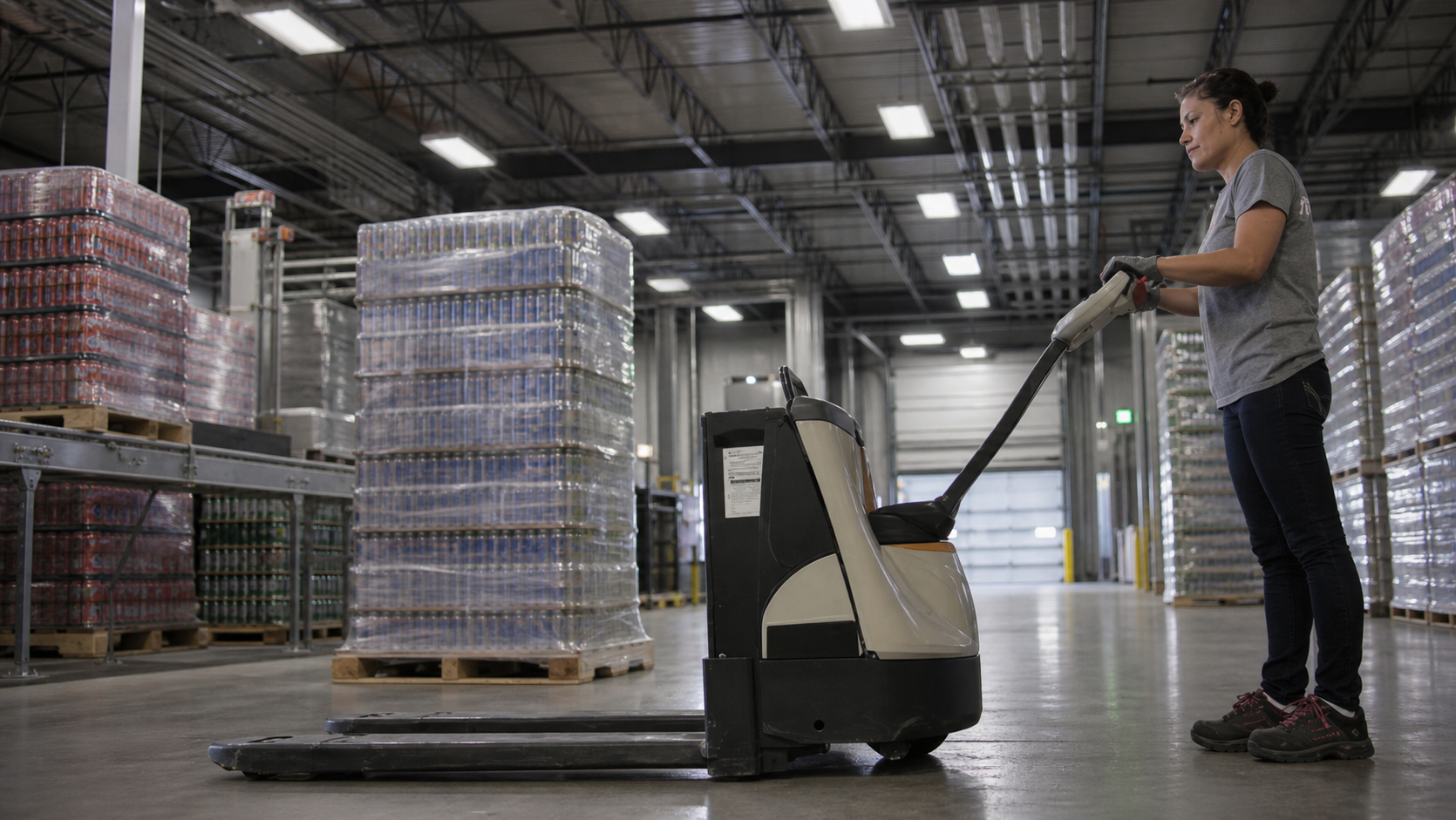
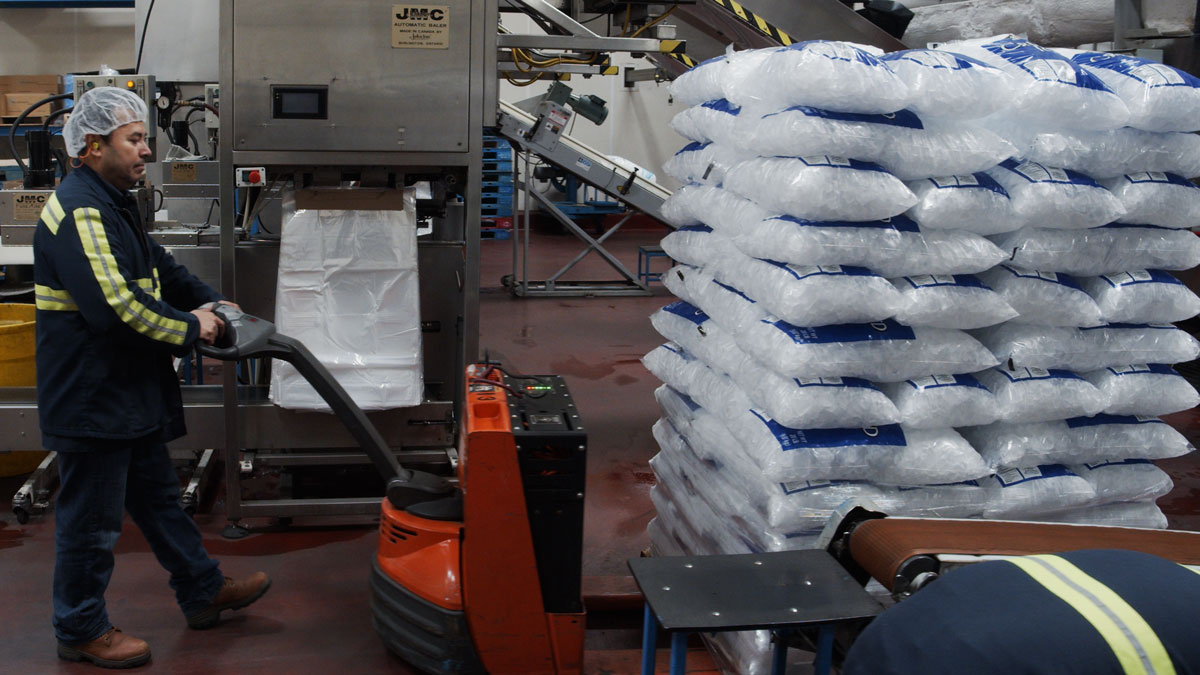
Keep trailer loading moving with a lithium ion battery that stays in the pallet jack and opportunity charges between loads. No watering, no battery changes, and consistent power through every outbound wave.
View
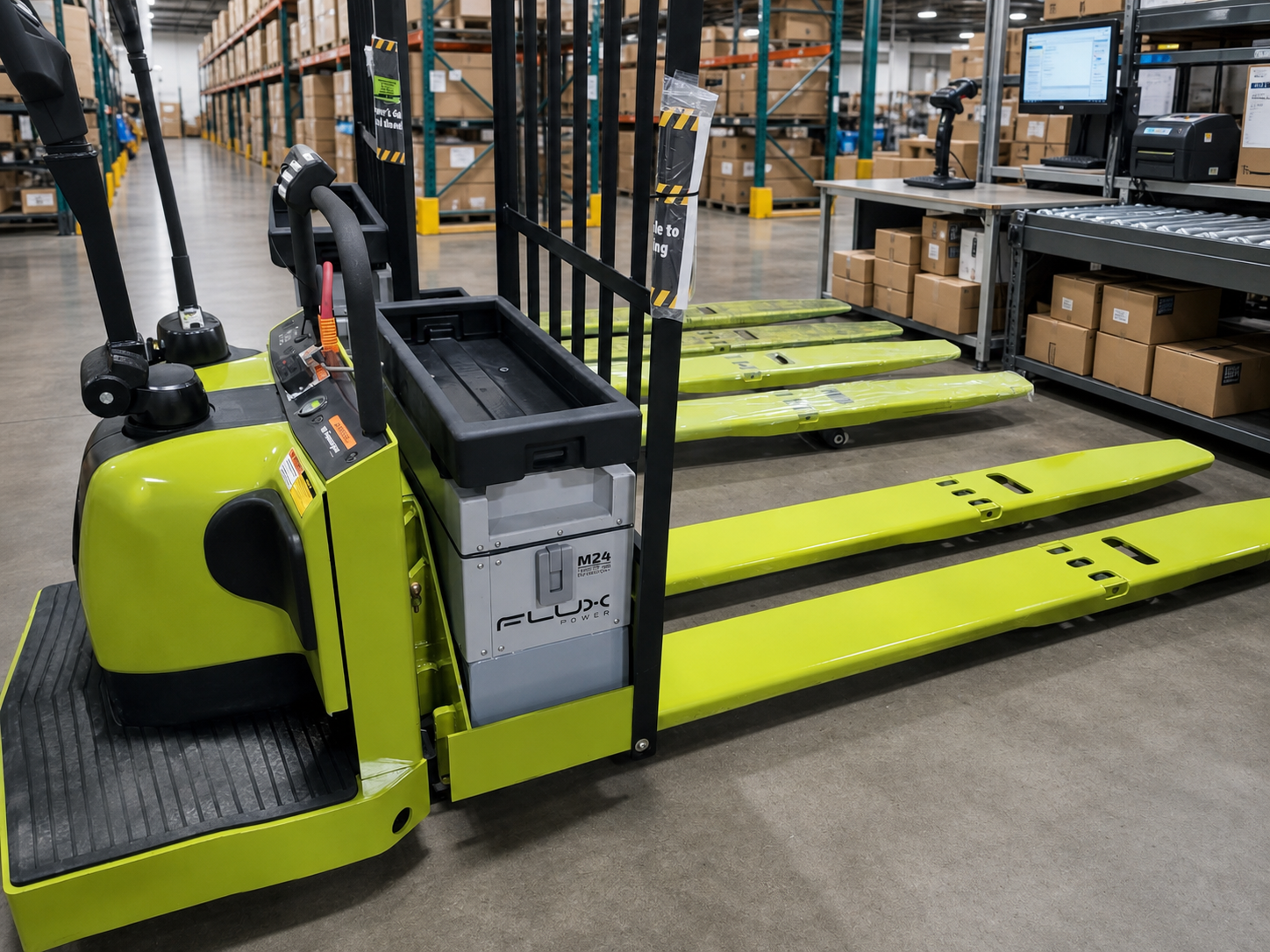
Power cross dock staging and order picking across long shifts. The M24 charges during breaks and natural pauses, so riders stay on the floor instead of waiting in the battery room.
View
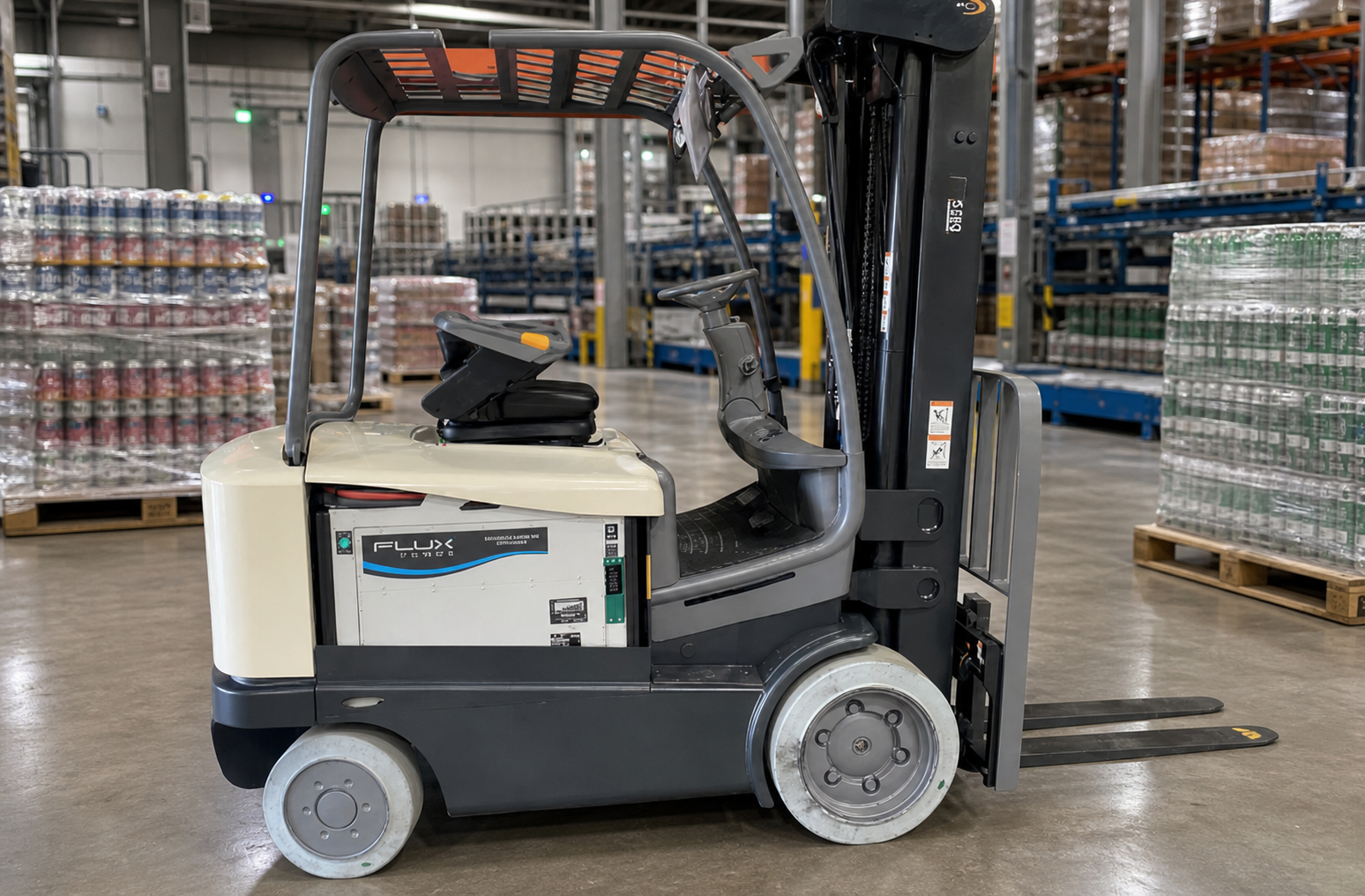
Handle dock loading, devanning, and yard moves with high capacity lithium ion power rated from -22°F to 131°F. A strong option for replacing eligible propane and diesel counterbalance trucks with electric.
ViewPorts, terminals, and logistics hubs often run continuous schedules to match vessel arrivals and shipping demand. Lead acid operations typically need spare batteries and a battery room, and propane fleets need tank changes and storage. Lithium ion batteries can be charged during breaks and between shifts, helping one battery per truck support a continuous operation.

Use opportunity charging to add energy throughout the operating day.
Reduce dependence on spare batteries, changing equipment, and propane storage.
Match battery capacity and charger output to duty cycles and charging windows.
Track charging behavior across shifts with connected fleet data fleet utilization data..
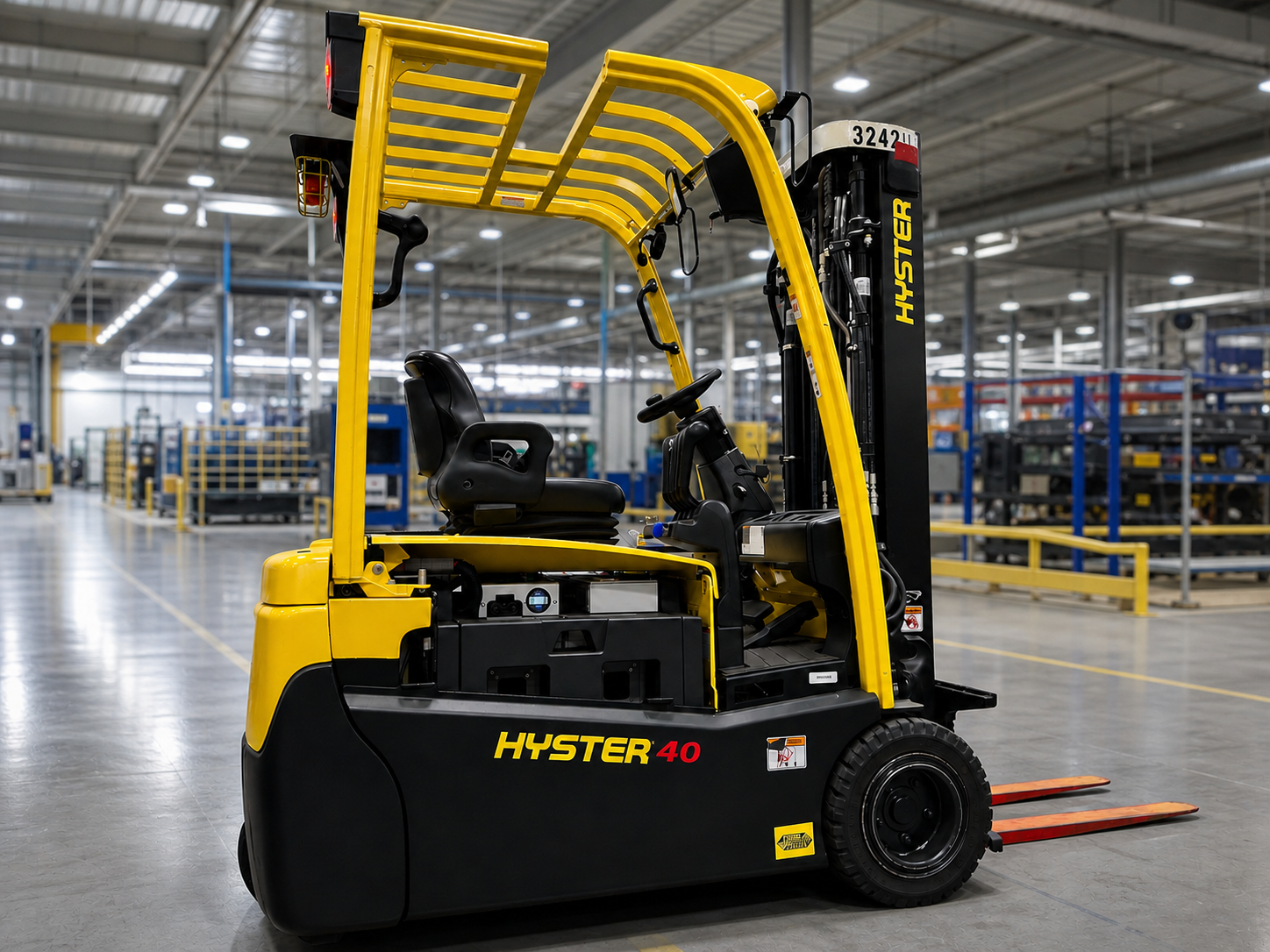
Built for nonstop schedules, the G2 X48 delivers up to 32.3 kWh of usable energy and supports up to 300A continuous charging for fast turnaround between shifts. One battery per truck can keep counterbalance forklifts working through vessel surges without a battery room.
View
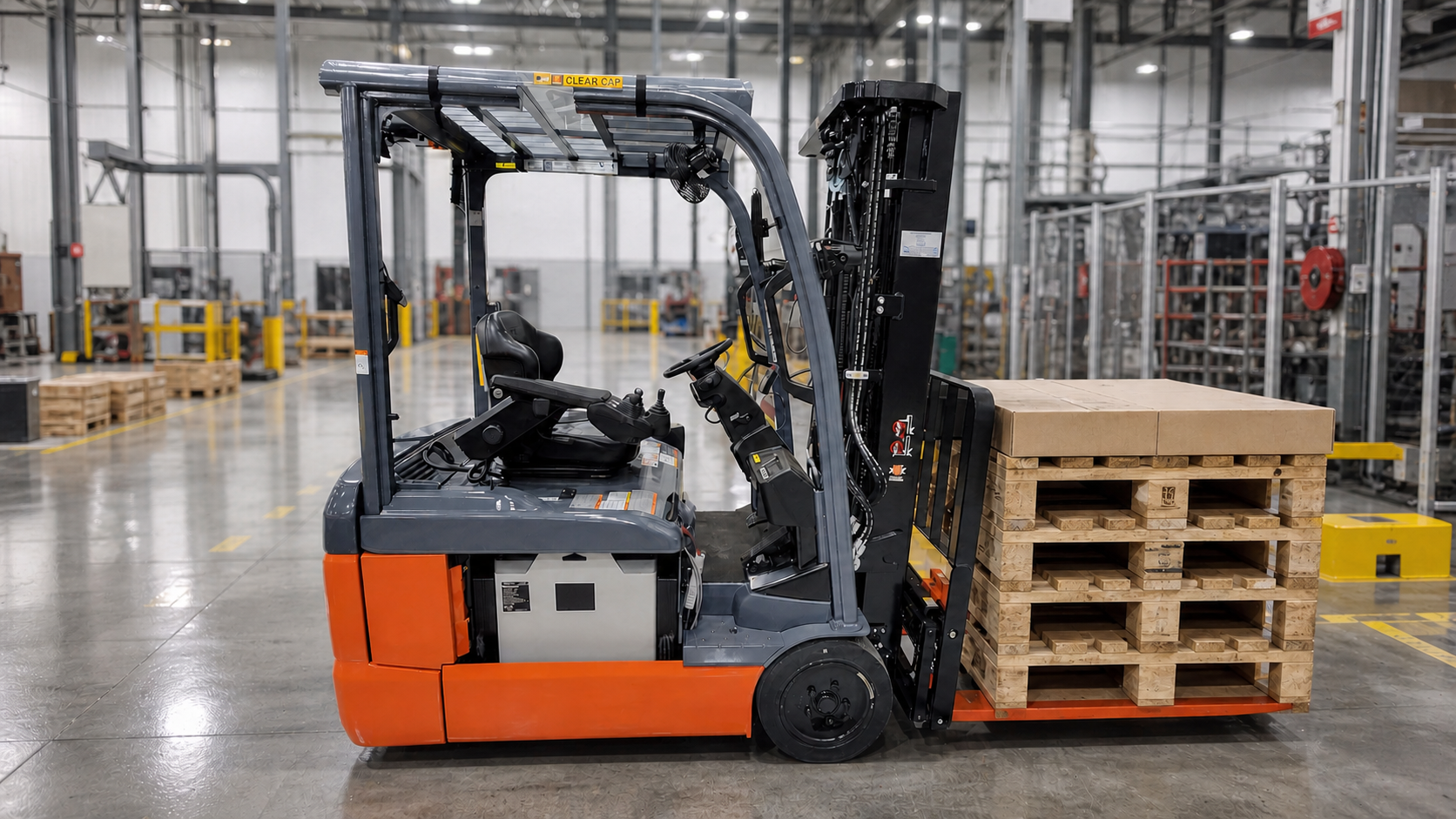
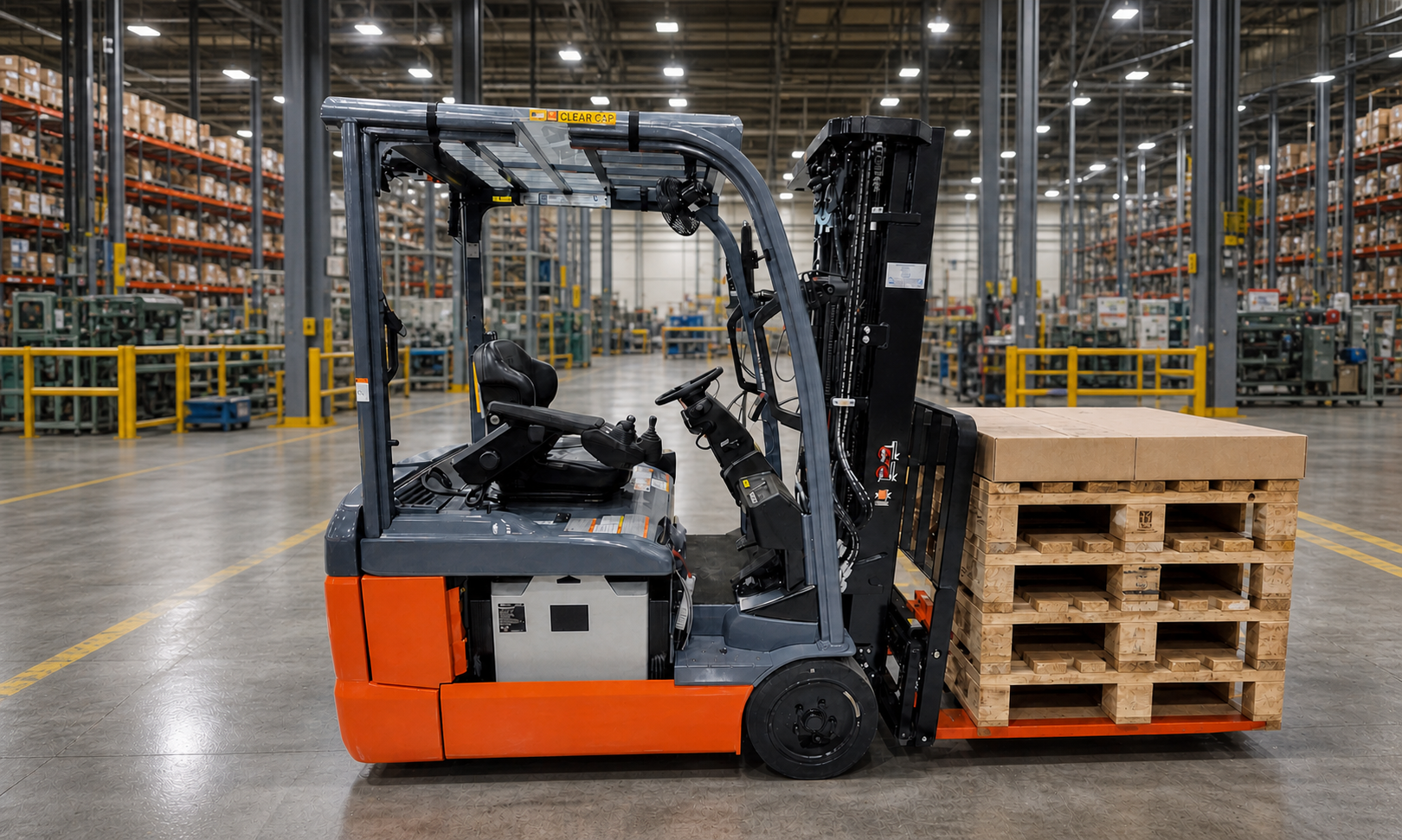
Higher sustained power for extended work shifts. L-Series batteries opportunity charge during breaks and shift changes, keeping 3 wheel forklifts available for trailer loading and dock work around the clock.
View
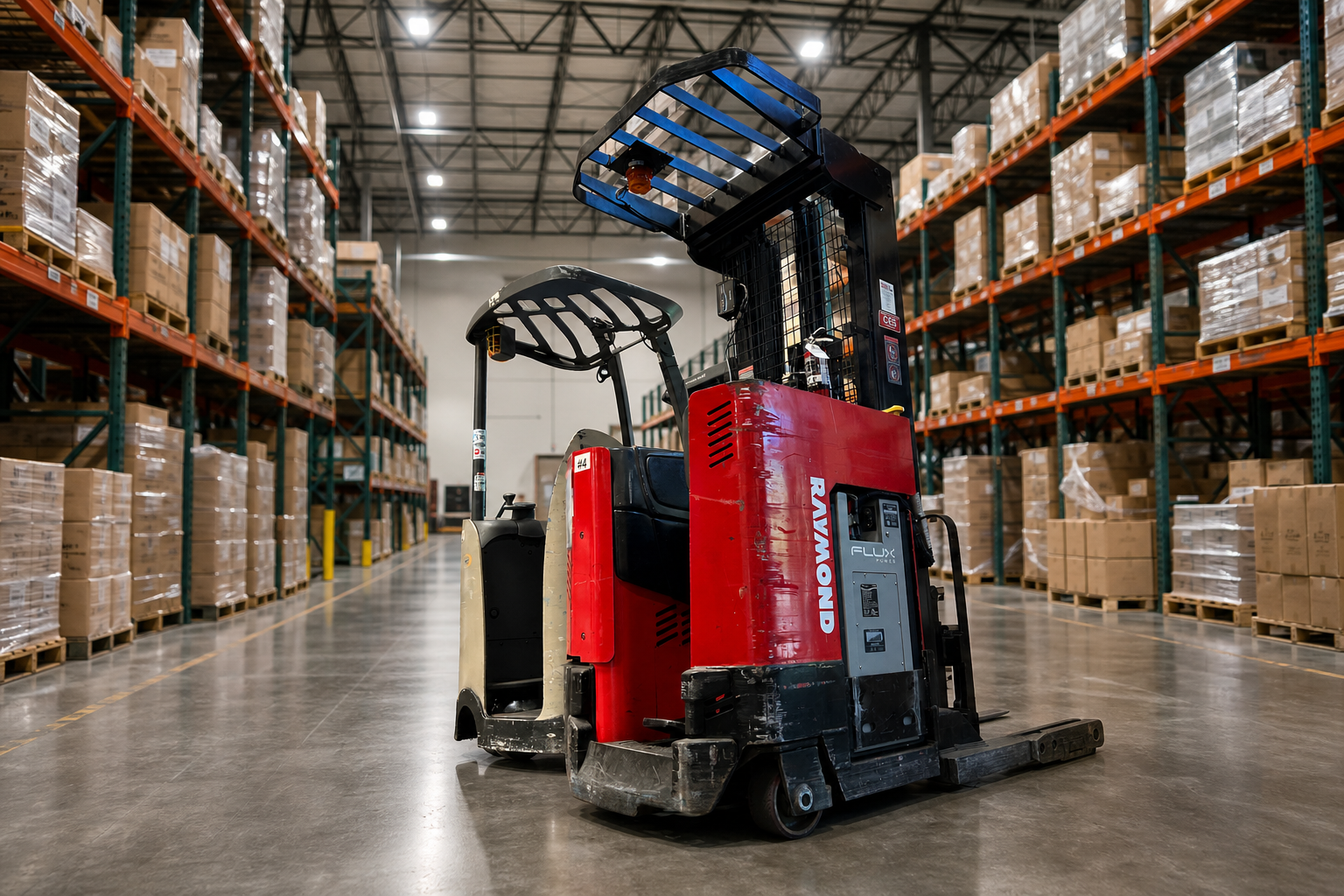
Keep high density storage moving through every shift. The M36 charges in the truck during natural pauses, so reach trucks in port warehouses stay in service without spare batteries or changeout equipment.
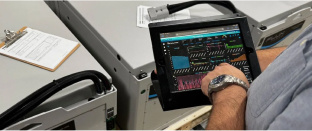
ViewSee how every battery performs across every shift. SkyEMS tracks state of charge, charging behavior, temperature, and usage in real time. Alerts flag issues before equipment is pulled from service, and utilization data helps you plan charging windows so each truck has the energy it needs for continuous operation.
ViewFacilities running two-shift, three-shift, or continuous production schedules need an energy strategy that fits limited charging windows. Lithium-ion batteries can be charged during breaks and between operating periods, helping equipment return to service without a dedicated battery changing process. Flux Power can evaluate equipment utilization, energy demand, shift schedules, and charger availability to develop a charging approach that supports the operation.
Use opportunity charging to add energy throughout the operating day.
Reduce dependence on spare batteries and battery changing equipment.
Match battery capacity and charger output to equipment duty cycles and available charging time.
Monitor charging behavior and state of charge trends across shifts with connected fleet data.
Reliable energy for demanding loading, unloading, transport, and material handling applications requiring higher capacity.
View
Lithium-ion power designed for maneuverability and material movement in warehouse environments where space and equipment availability matter.
View
Reliable lithium-ion energy for narrow-aisle equipment operating in high-density warehouse environments.
View
A compact lithium-ion power solution for pallet movement, receiving, staging, and dockside applications.
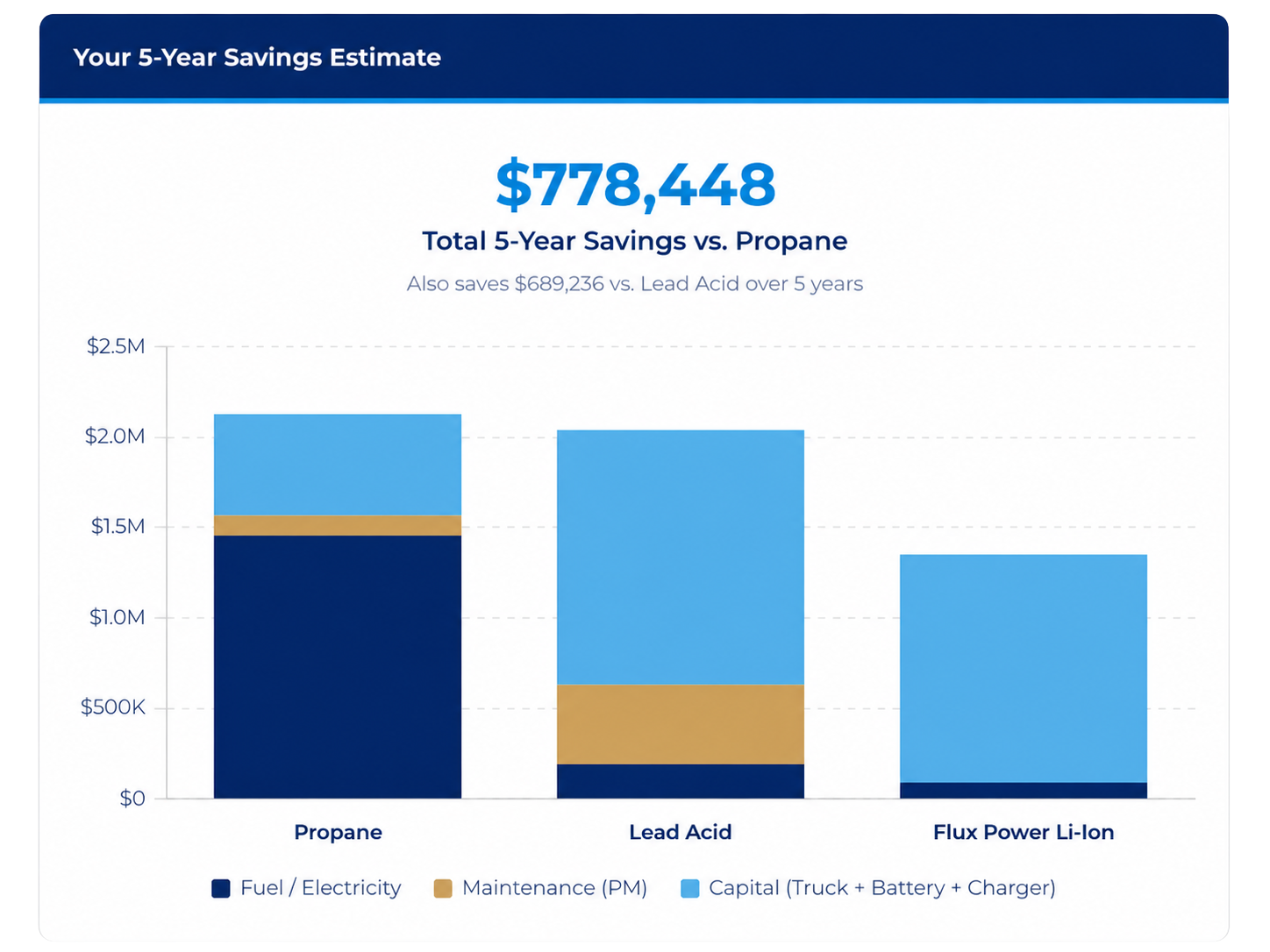
ViewFuel, maintenance, battery changes, spare inventory, battery rooms, propane storage, and downtime all affect the total cost of powering a logistics fleet. Flux Power helps operators quantify these cost drivers and compare the long term impact of moving to lithium ion.
Reduce propane purchases and tnak handling as eligible trucks move to electric.
Eliminate routine watering, cleaning and equalization.
Reduce labor and equipment used for battery changes.
Use operating data to support fleet sizing and replacement decisions.
Move eligible propane and diesel counterbalance trucks to electric and stop paying for fuel deliveries, tank changes, and engine service. Rated for 3,000+ cycles at 80% depth of discharge, X-Series batteries last up to three times longer than traditional lead acid.
View
Pallet jacks are often the largest share of a logistics fleet, so maintenance savings add up quickly. S-Series batteries require no watering, cleaning, or equalization and stay in the truck, which reduces battery handling labor across every shift.
View
See what your fleet could save. Flux Power reviews your operating hours, current fuel and energy costs, maintenance labor, and charger needs to estimate the long term impact of moving to lithium ion.
ViewLogistics equipment often moves between indoor warehouses, open docks, and yards exposed to heat, cold, wind, and moisture. Flux Power lithium-ion batteries are IP rated and designed with integrated heaters and precision cooling to support a wide operating temperature range.
Operate from -22°F to 131°F (-30°C to 55°C).
Integrated heaters support cold weather performance.
Sealed, IP rated design with no watering or acid handling.
Monitor battery temperature remotely with SkyEMS.
Built for work that moves between the warehouse, the dock, and the yard. X-Series batteries are rated from -22°F to 131°F, with integrated heaters for cold weather performance and precision cooling for hot docks. The sealed, IP rated design requires no watering or acid handling, so outdoor duty adds no extra battery maintenance..
ViewKnow how changing conditions affect your fleet. SkyEMS monitors battery temperature, state of charge, and health in real time and sends alerts when conditions need attention. Teams can track how heat, cold, and outdoor duty affect performance across the fleet without manual checks in the yard.
ViewPorts and logistics sites face increasing pressure to reduce emissions from regulators, port authorities, tenants, and shippers. In California, the Zero-Emission Forklift regulation phases out large spark ignition forklifts, including propane models, on a set schedule. Many of these trucks can be replaced with Class I electric counterbalance forklifts powered by Flux Power lithium ion batteries, which produce zero tailpipe emissions. Heavier equipment may remain on diesel, so Flux Power helps operators plan a practical mixed fleet transition.
Electrify Class I, II, and III forklifts with zero tailpipe emissions.
Replace eligible propane and diesel counterbalance trucks with Class I electric forklifts.
Plan a phased, mixed fleet transition that fits your heaviest applications.
Use fleet data to document energy use and utilization.
The electric path for eligible propane and diesel counterbalance trucks. X-Series batteries power Class I forklifts with zero tailpipe emissions, no fuel deliveries or tank storage, and opportunity charging that supports multi shift schedules.
View
Find out which trucks are ready to go electric. Flux Power reviews your current power sources, equipment classes, duty cycles, and site charging infrastructure, then recommends a phased plan that fits your heaviest applications.
View
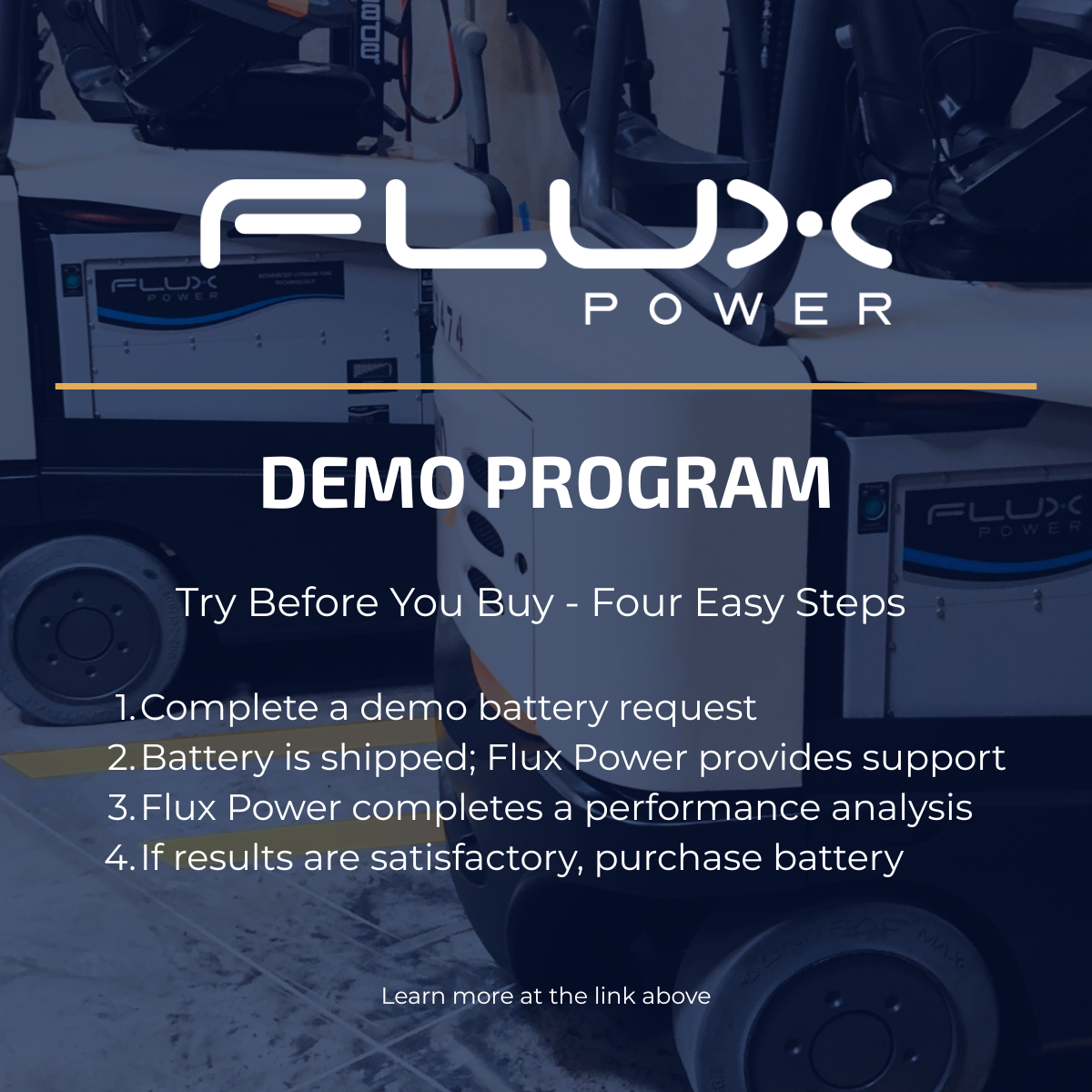
Test lithium ion in your own operation before committing a fleet. Run a Flux Power battery on your equipment, shifts, and site conditions to see how electric performs on your docks.
View
Close the loop on your sustainability goals. Flux Power offers end of life battery recycling to help operators retire batteries responsibly and support their environmental reporting.
View
EQUIPMENT MANUFACTURING
Read the full customer storyProblem
A 30-truck fleet used flooded lead-acid batteries, with two batteries per truck, creating a 60-battery system that demanded maintenance, charging, and handling. Maintenance time pulls labor from higher-value tasks, and unavailable trucks disrupt production and flow.
Solution
Switching to Flux Power lithium-ion batteries eliminated battery swaps and reduced maintenance.
Result
They lowered their 5-year costs by $1.6M+ and reduced their fleet and maintenance size.

CONNECTED FLEET INTELLIGENCE
SkyEMS turns battery and equipment data into practical fleet insights. Monitor usage, charging behavior, asset health, and performance trends across terminals, warehouses, and regional hubs.
Equipment price is only one part of the financial picture. Fuel, energy, maintenance, labor, battery changes, charging practices, facility infrastructure, and downtime all affect the total cost of powering a logistics fleet.
Evaluate equipment usage by shift, site, and seasonal surge.
Compare propane, diesel, and lead acid costs against lithium-ion.
Calculate time spent on engine service, watering, tank changes, and battery changes.
Review equipment types, duty cycles, and charging infrastructure across locations.
Flux Power can evaluate your equipment, shifts, charging practices, maintenance requirements, and current power source to identify the potential operational and financial impact of transitioning to lithium-ion.
Get the facts on longer run-times, faster charging, and reduced maintenance of lithium-ion batteries in comparison to lead acid.
Explore our Fleet Impact whitepaper, built on real-world fleet case studies.
How one heavy-equipment manufacturer eliminated battery downtime, reduced fleet size, and cut energy costs.
Maintenance represents a good amount of the average warehouse’s annual spend, and it is not an area to skip to maintain your fleet’s longevity.
Lithium-ion batteries and Hydrogen fuel cells have been renowned for their zero emission benefits, but how do they stack up against each other in the manufacturing space?
When it comes time to replace aging batteries in your fleet, it pays to look beyond the upfront purchase price.
Whether you're moving raw ingredients or finished goods, our batteries help you stay compliant, reduce downtime, and keep the line moving.
Power your inbox with the latest from Flux Power - innovation, insights, and industry news.
Flux Power, the Flux Power logo, Flux, Lift, and SkyBMS are either registered trademarks or trademarks of Flux Power in the United States and/or other countries. All other trademarks are the property of their respective owners.
Copyright Flux Power © 2026. All rights reserved. | Privacy Policy