<img alt="" src="https://consortiumtrade.com/811992.png" style="display:none;">
POWERING AIRLINE AND GSE OPERATIONS

Lithium-Ion Batteries for Airline and Ground Support Equipment 

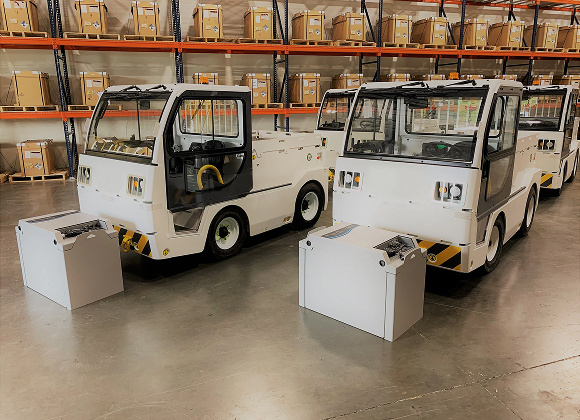
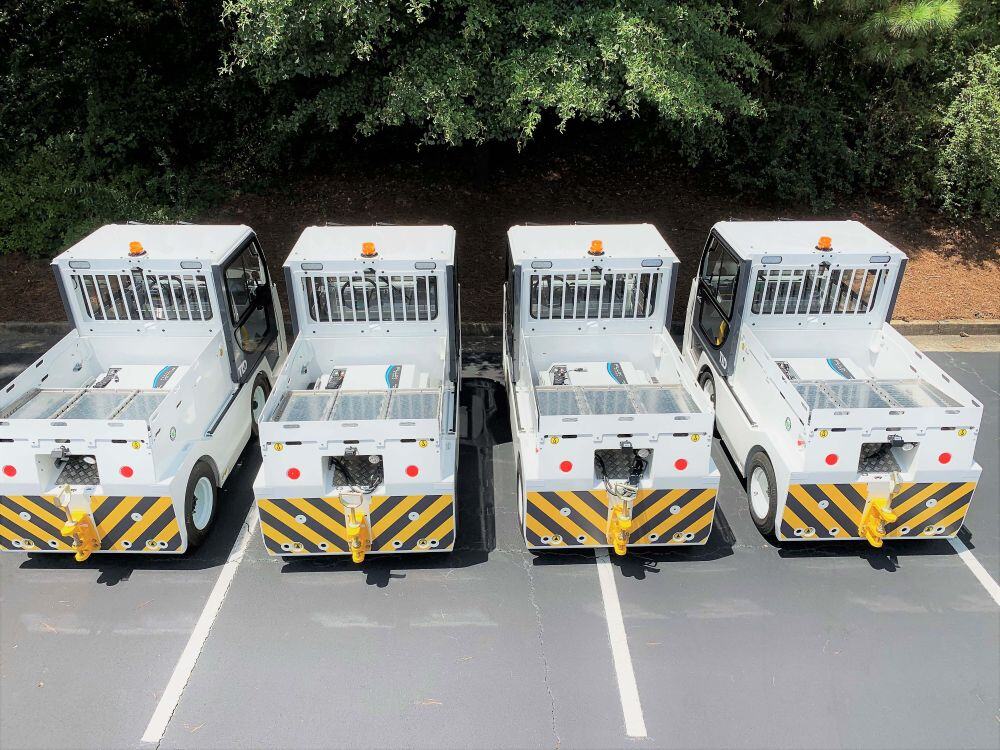
Keep aircraft on schedule, eliminate downtime, and simplify ground operations with lithium-ion energy solutions purpose-built for baggage tugs, belt loaders, pushback tractors, and GSE equipment. 
Talk to an Energy Expert

GSEPageHero

A T  A  G L A N C E

Flux Power lithium-ion batteries for air cargo power the Class I, II, and III forklifts, pallet jacks, and automated vehicles that move shipments through air cargo terminals, plus G-Series batteries for electric ground support equipment such as tow tractors and belt loaders. The LiFePO4 batteries opportunity charge between flight banks, require no watering, include heaters for cold ramp conditions, and produce zero tailpipe emissions. SkyEMS adds real time monitoring across shifts and stations.

Reliable Power Across Your Ground Operations

Ground operations depend on equipment being ready every moment, from pre-flight servicing to baggage handling to final departure. Flux Power lithium-ion energy solutions support continuous operations across your entire GSE fleet.

Fast Charging and Quick Turnarounds

forklift

Support rapid charging during gate operations and scheduled breaks.

Safety and Compliance

Icon-Monitoring

Eliminate hazardous materials from ground operations and meet international airline safety standards.

Reliable Cold and Weather Performance

Icon-Reporting

Maintain full power in any condition: no cold-weather swaps, no weather-dependent downtime. 

Fleet Visibility and Intelligence

Icon-Remote

Monitor charge status, health, utilization, and alerts across gates, tugs, and service fleets.  

Built for the Way Airports Operate 

Airlines manage ground support across multiple parallel workflows with zero tolerance for delay. Aircraft turn in 30–45 minutes. Ground crews work in all weather. Equipment must be ready on schedule, every time.  A smarter battery strategy keeps tugs charged, equipment available, and teams focused on operations, not maintenance.

Keep Critical Ground Service Equipment Ready for Tight Turnaround Windows

 Pushback tractors, belt loaders, catering trucks, lavatory vehicles, and fuel trucks operate on tight schedules during aircraft turnarounds. A single battery failure cascades into delays and missed departures. 


Key Benefits

  • Reliable Starting Power in Cold Weather

  • Fast Charging During Gate Operations

  • Minimal Maintenance Keeps Ground Crews Focused


Explore Batteries for Pre-Flight and Aircraft Servicing
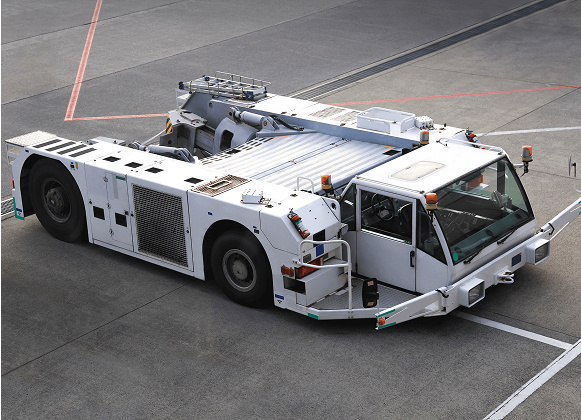
GSE-PushbackTractors

G-Series | Ground Support Equipment

Flux Power lithium-ion batteries for aircraft pushbacks and other pre-flight and aircraft servicing equipment.

View

 CASE RESULTS

Proven in Demanding Airline Operations

Vertical Image Transformation-1-1

Airline & GSE

Problem

A major U.S. carrier operating 50+ baggage tugs, belt loaders, and support vehicles across multiple hubs faced frequent battery failures during peak turnaround windows. Lead-acid batteries degraded in winter, required constant maintenance, and forced equipment off the ramp during critical periods. Ground crews spent hours managing battery swaps and maintenance instead of focusing on aircraft operations. 

Solution

The airline transitioned its entire baggage tug and support equipment fleet to Flux Power lithium-ion batteries, paired with SkyEMS fleet monitoring for real-time visibility across gates and hubs.

Result

40% reduction in ground crew battery maintenance labor

Zero equipment downtime due to battery failure during peak turnaround windows

50% reduction in annual battery replacement costs

100% uptime achieved during winter operations (vs. seasonal degradation with lead-acid)

Real-time visibility into fleet status and battery health across all gates

Learn More About Lithium-Ion for Airlines
50+ Tugs & Loaders Converted
40% Reduction in Maintenance Labor
0 Downtime During Peak Windows
100% Winter Uptime Achievement

 CONNECTED FLEET INTELLIGENCE 

See How Your Battery Fleet Is Performing

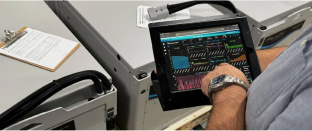
SkyEMS turns battery and equipment data into practical fleet insights. Monitor usage, charging behavior, asset health, and performance trends across forklifts and GSE, in the terminal and on the ramp. 


Explore SkyEMS

Support - Industry

Monitor Fleet Health

Track battery health, charge status, temperature, runtime, and reported alerts.

Identify - Industry

Identify Underused Assets

Compare equipment activity and utilization to uncover opportunities across the fleet.

Visibility - Industry

Improve Visibility

View connected battery assets and performance information from one dashboard.

Support - Industry

Support Multiple Facilities

Compare fleet activity across warehouses, production sites, and distribution centers.

Understand the True Cost of Powering Your Air Cargo Fleet 

Equipment price is only one part of the financial picture. Fuel, energy, maintenance labor, battery changes, charging infrastructure, cold weather performance, and missed cutoffs all affect the total cost of powering an air cargo fleet. 

Flight Schedule and Hours

 Evaluate equipment usage by shift, flight bank, and peak season 

Current Power Source

 Compare propane and lead acid costs against lithium ion. 

Maintenance & Labor

 Calculate time spent on engine service, watering, tank changes, and battery changes. 

Fleet Mix and Stations

 Review forklifts, GSE, duty cycles, and charging locations across stations. 

 Flux Power can evaluate your fleet, flight schedule, current power source, site conditions, and energy costs to identify the potential operational and financial impact of transitioning to lithium ion. 

Request a Fleet Impact Assessment

Airline and GSE Fleet Resources

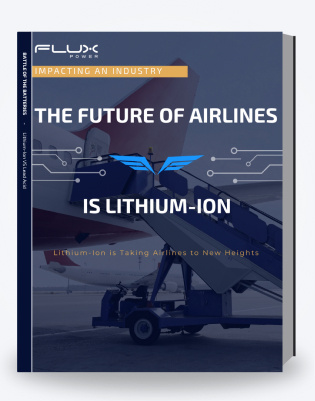
The Future of Airlines is Lithium eBook

Airlines are switching to lithium-ion battery systems to improve efficiency and sustainability. See how lithium-ion technology is revolutionizing the airline industry.

Fleet Impact Assessment Guide

Explore our Fleet Impact whitepaper, built on real-world fleet case studies.

Aircraft Ground Handling in Cold Weather

The key to successful airport operations is to work on weatherproofing your GSE fleet to reduce the chance of mechanical failures. 

How to Choose the Right Forklift Battery

Explore the factors operations teams should consider when selecting a battery solution for their forklift fleet.

How Real-Time Battery Data Improves Fleet Performance

More fleet operators are turning to real-time battery data to gain better visibility into their operations and make smarter decisions.

Lead vs Lithium eBook

Get the facts on longer run-times, faster charging, and reduced maintenance of lithium-ion batteries in comparison to lead acid.

Build a Smarter Power Strategy for Your Ground Support Fleet

Flux Power can help you evaluate your fleet, operating schedule, charging requirements, and connected energy data to build a power strategy around the way your operation actually works.

Airline and GSE Lithium-Ion Battery FAQs 

Accordion Icon Does Flux Power make batteries for tow tractors, belt loaders, and cargo loaders?
 Yes. Flux Power G-Series lithium ion batteries, including the G80 and higher voltage G96, power electric ground support equipment such as tow tractors, belt loaders, and cargo loaders 
Accordion Icon Can lithium-ion batteries keep up with 24/7 operations?

 Yes. Flux Power lithium ion batteries are designed for opportunity charging during breaks, between flight banks, and at shift change, so one battery per truck can often support round the clock schedules. 

Accordion Icon Which Flux Power batteries power forklifts in air cargo terminals?

Most cargo terminals use X-Series batteries for Class I counterbalance forklifts, S-Series for walkie pallet jacks, and M36 for narrow aisle reach trucks. L-Series, M24, and C-Series cover 3 wheel forklifts, end and center riders, and automated vehicles.

Accordion Icon Can I convert my existing lead acid GSE to lithium ion?
 Yes. G-Series batteries can be fitted to existing electric GSE as well as new equipment. They include weight adapters to help match the counterweight of the lead acid battery they replace. 
Accordion Icon How fast do lithium-ion batteries for GSE charge between flights?
 Lithium-ion GSE batteries typically recharge in 1 to 3 hours, compared with 8 or more hours for lead acid. They also support opportunity charging during gate time and breaks, so equipment can stay in service across back to back turns without battery swaps. 
Accordion Icon Do lithium-ion GSE batteries work in winter operations?
 Yes. G-Series batteries include integrated heaters that regulate battery temperature for cold weather charging and operation on the ramp. Lead acid batteries lose capacity in the cold, which can shorten runtime and delay turns. 
Accordion Icon Can I monitor my GSE batteries remotely?

 Yes. SkyEMS gives airlines and ground handlers real time data on charge level, temperature, usage, and battery health across their GSE fleet. Alerts help maintenance teams act before a battery problem takes equipment out of service during a flight bank.