






Warehouse downtime rarely announces itself in advance. A forklift battery fails mid-shift, a technician has to diagnose it after the fact, and receiving or put-away backs up while the fleet compensates. The pattern is familiar to any fleet manager running lead-acid power: downtime shows up as an event, but it is the end point of weeks of invisible battery degradation nobody was tracking.
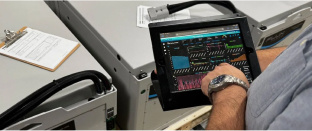
This is the problem Intelligent Fleet Power is built to solve. Rather than treating batteries as a maintenance afterthought, Flux Power's approach pairs lithium-ion battery hardware with SkyEMS, an AI-powered fleet energy management platform that gives operators fleet-wide visibility into battery health before it becomes a floor problem.
What Is Intelligent Fleet Power?
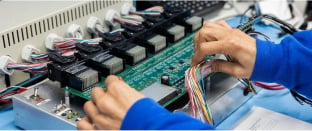
Intelligent Fleet Power is a combination of three things working together: lithium-ion battery packs engineered for industrial duty cycles, a battery management system (BMS) that governs how each pack charges and discharges, and a software layer, SkyEMS that aggregates data across the entire fleet into a single view. Instead of managing batteries one truck at a time, fleet managers manage power as a system.
That system-level view is what turns battery management from reactive to predictive, and it's the mechanism behind most of the downtime reduction described below.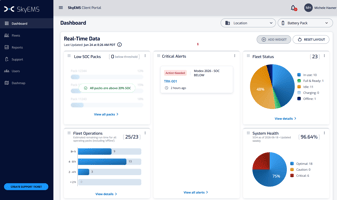
How Fleet Energy Management Software Reduces Downtime
1. Predictive Visibility Replaces Run-to-Failure
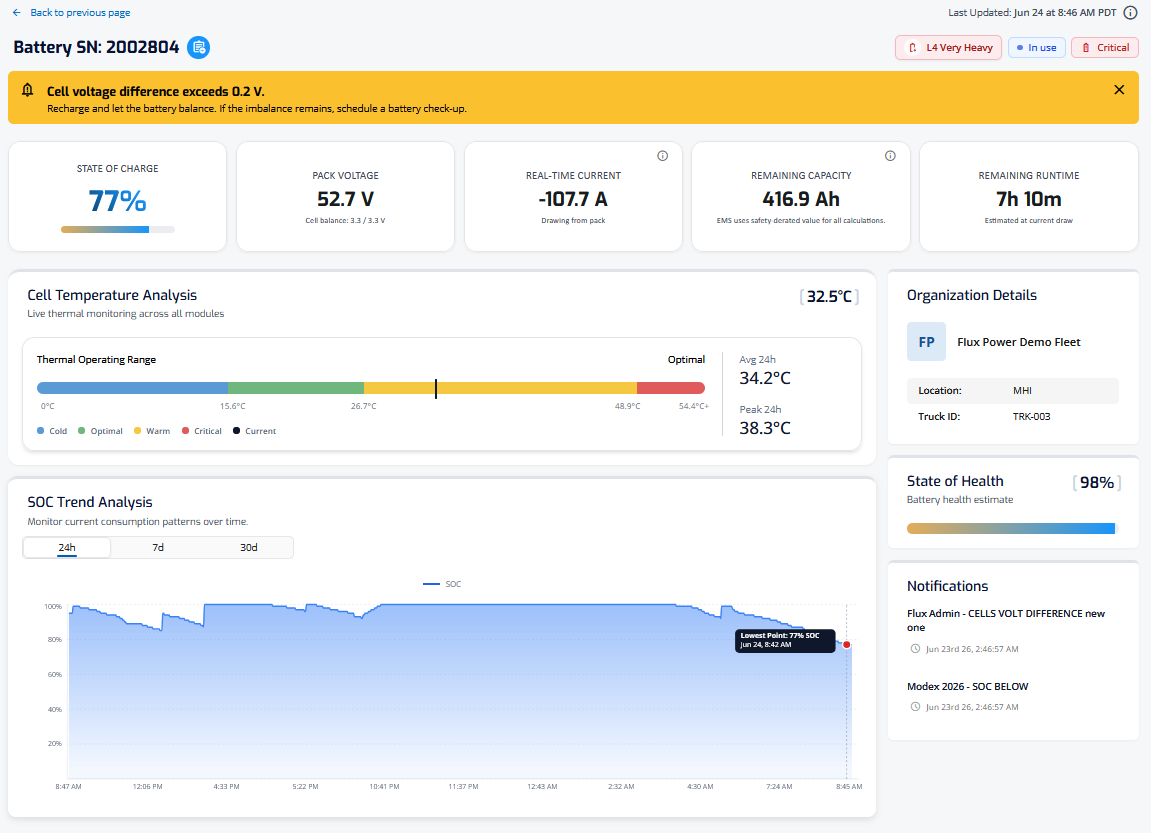
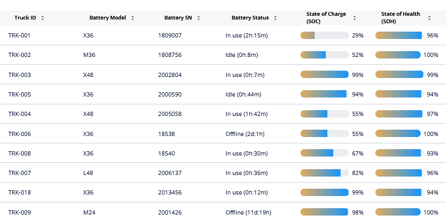
Without fleet-level monitoring, most operations only learn a battery is failing when it fails. SkyEMS tracks state of health (SOH) and forecasts end of life (EOL) at the individual pack level, across the entire fleet, so fleet managers can see which packs are trending toward replacement weeks out, not the morning it happens. That turns battery replacement into a planned event instead of an emergency work order.
2. Opportunity Charging Removes the Swap
Lithium-ion packs are built for opportunity charging, topping off during breaks and shift changes rather than requiring a full charge-and-swap cycle. That eliminates the spare battery inventory, the battery room bottleneck, and the labor hours spent swapping batteries mid-shift, none of which show up on a P&L line labeled "downtime" but all of which cost operating time.
3. No Watering, No Equalization
Lead-acid maintenance routines, watering, equalizing charges, require scheduled downtime windows and dedicated technician time. Lithium-ion chemistry removes both from the maintenance calendar entirely.
4. Built-In Protection at the Pack Level
The BMS inside each battery manages charge and discharge behavior to protect the cell and extend usable life, reducing the failure modes, thermal stress, deep discharge, overcharge events that turn into unplanned downtime in the first place.
5. Fleet-Wide Data, Not Truck-by-Truck Guesswork
For multi-shift operations running dozens of trucks, the value compounds. SkyEMS gives fleet managers one dashboard across the whole fleet instead of manually checking individual trucks, so power-related decisions charging schedules, replacement timing, fleet sizing are based on data rather than anecdote.
.svg)
Why Certification Matters for Fleet Reliability
UL 2271 and UL 2580 certification, along with OEM approvals, indicate that a battery has been validated to perform reliably under real operating conditions not just tested in a lab. For a fleet manager evaluating a lithium-ion transition, certification status is a practical filter for which systems are actually ready for continuous industrial duty.
Frequently Asked Questions
What causes most unplanned forklift downtime? Most unplanned downtime traces back to the power system — battery failures that weren't visible until they happened, battery swaps that interrupt shifts, and maintenance routines like watering and equalization that lead-acid batteries require on a fixed schedule.
How does SkyEMS reduce warehouse downtime? SkyEMS monitors battery state of health (SOH) and forecasts end of life (EOL) across an entire fleet, giving fleet managers advance visibility to plan battery replacement before failure, rather than reacting to it after the fact.
Do lithium-ion forklift batteries need less maintenance than lead-acid? Yes. Lithium-ion batteries don't require watering or equalization charging, which removes two recurring maintenance routines and their associated downtime windows from the schedule entirely.
What is opportunity charging? Opportunity charging means topping off a battery during natural pauses in operation, like breaks or shift changes, instead of requiring a full charge-and-swap cycle. It is a core advantage of lithium-ion over lead-acid for multi-shift operations.
Are Flux Power's batteries certified for industrial use? Flux Power batteries carry UL 2271 and UL 2580 certification in the U.S .and are approved by several OEMs, indicating validation for reliable performance under real industrial operating conditions.
Want to see how Intelligent Fleet Power could reduce downtime in your operation? Contact Flux Power to talk through your fleet size and shift patterns.