









Why Battery Strategy Is Becoming a Warehouse Priority
And How Telematics is Accelerating that Shift
For years, warehouse battery decisions were treated as a maintenance issue. It was handled after forklifts were purchased and operations were already in motion. Today, that mindset is changing rapidly.
As warehouses face increasing pressure to improve productivity, reduce downtime, manage labor shortages, and support sustainability initiatives, battery strategy has become a core operational priority.
From distribution centers and 3PLs to manufacturing and cold storage facilities, operators are recognizing that the right energy strategy directly impacts uptime, efficiency, labor utilization, and long-term operating costs.
At the center of this shift is a growing focus on operational visibility with telematics is playing a major role.
Warehouses Are Under More Pressure Than Ever
Modern warehouses are expected to move faster, operate longer hours, and handle greater throughput with fewer disruptions. At the same time, businesses are navigating:
- Rising labor costs
- Increased customer delivery expectations
- Expanding automation initiatives
- Space constraints
- Sustainability goals
- Pressure to reduce Total Cost of Ownership (TCO)
Material handling equipment sits at the center of these operations and batteries power every shift. When batteries underperform, warehouse productivity suffers.
Battery Downtime Impacts More Than Equipment
Battery-related inefficiencies can quietly create operational bottlenecks across an entire facility.
Traditional lead-acid systems often require:
- Battery changing rooms
- Watering and maintenance schedules
- Cool-down periods
- Spare battery inventory
- Additional labor to manage charging processes
These workflows consume valuable time and warehouse space while increasing operational complexity.
In high-throughput environments, even small interruptions can lead to delayed orders, lower productivity, and increased labor strain.
That’s why many operators are shifting toward lithium-ion battery platforms designed to support continuous operations with faster charging, opportunity charging capabilities, and reduced maintenance requirements.
Telematics Is Bringing Data Into Battery Strategy
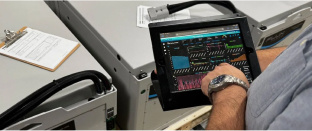
As warehouse operations become more data-driven, telematics systems are helping operators gain deeper insight into fleet and battery performance.
Rather than reacting to downtime after it occurs, operators can now monitor battery usage, charging patterns, equipment utilization, and operator behavior in real time.
This level of visibility helps warehouses:
- Identify underutilized or overworked equipment
- Improve charging practices
- Reduce unnecessary downtime
- Optimize fleet deployment
- Monitor battery health and performance
- Support preventative maintenance initiatives
When paired with lithium-ion technology, telematics can help operations make smarter decisions that improve both productivity and long-term battery performance.
Energy Strategy Is Now Part of Operational Strategy
Warehouse leaders are increasingly evaluating batteries the same way they evaluate automation, fleet utilization, and warehouse management systems.
Questions that once focused solely on upfront cost are evolving into broader operational considerations, including:
- How can we maximize equipment uptime?
- Can we reduce labor tied to battery maintenance?
- Are our charging systems scalable for future growth?
- How much warehouse space is dedicated to battery management?
- What data do we have on battery performance and utilization?
- How can telematics improve operational efficiency?
- What is the long-term operational cost over the life of the equipment?
As electrification expands across warehouse fleets, battery strategy is becoming directly tied to operational performance and business scalability.
Lithium-Ion Technology Is Driving the Shift
Lithium-ion battery technology has accelerated the conversation around warehouse energy planning because it addresses many of the operational limitations associated with legacy battery systems.
Key advantages include:
Increased Uptime
Fast charging and opportunity charging help reduce interruptions and support multi-shift operations.
Reduced Maintenance
Lithium-ion batteries eliminate watering, equalization, and many routine maintenance tasks associated with lead-acid batteries.
Improved Space Utilization
Without battery rooms and large spare battery inventories, warehouses can reclaim valuable floor space.
Predictable Performance
Advanced battery management systems and telematics provide visibility into battery health, usage trends, and charging behavior.
Better Operational Insights
Telematics data allows operators to make informed decisions about fleet efficiency, utilization, and energy management.
Sustainability Benefits
Lithium-ion technology can help reduce waste, energy consumption, and overall environmental impact.
For warehouse operators focused on productivity and long-term efficiency, these benefits are becoming increasingly difficult to ignore.
Battery Decisions Now Influence Competitive Advantage
As supply chains become more demanding, operational efficiency is becoming a major differentiator.
Companies investing in modern battery strategies and telematics capabilities are often better positioned to:
- Support longer operating hours
- Scale operations more efficiently
- Reduce unplanned downtime
- Improve labor productivity
- Increase operational visibility
- Lower long-term operating costs
- Advance sustainability initiatives
Battery strategy is no longer simply about powering equipment. It is about using data and technology to improve warehouse performance.
The Future of Warehousing Is Connected and Electrified
Warehouses are evolving quickly, and energy infrastructure is evolving with them.
Operators that proactively evaluate battery strategy and telematics capabilities today may be better prepared to handle future growth, automation expansion, and increasing operational demands.
As the industry continues shifting toward electrification, connected fleets, and smarter operations, battery technology and telematics will play an increasingly important role in warehouse success.
For many operations, the question is no longer whether battery strategy matters; it is how quickly organizations can leverage it as a competitive advantage.
To learn how Flux Power can help, talk to one of our Energy Experts today.