




The logistics and warehousing industry continue to evolve rapidly. Today’s third-party logistics (3PL) providers face increasing pressure to improve throughput, reduce operational costs, maximize uptime, and meet growing sustainability expectations.
As warehouses expand multi-shift operations and distribution demands continue increasing, many logistics companies are reevaluating one critical component of their operations: forklift battery technology.
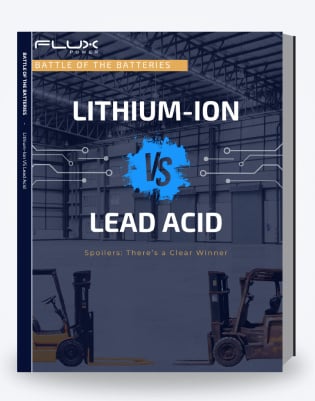
For many 3PL and warehouse operations, switching from traditional lead-acid batteries to lithium-ion forklift batteries delivers measurable improvements in productivity, efficiency, safety, and total cost of ownership.
Why Lithium-Ion Batteries Are Growing in Logistics & Warehousing
Modern logistics facilities operate in highly demanding environments with:
- High-throughput material movement
- Multiple daily shifts
- Labor shortages
- Tight shipping windows
- Seasonal demand spikes
- Increasing automation initiatives
Traditional lead-acid batteries often struggle to keep up with these operational demands due to:
- Long charging times
- Battery swapping requirements
- Cooling periods
- Regular watering and maintenance
- Declining power during shifts
- Large battery room requirements
Lithium-ion battery technology helps eliminate many of these operational inefficiencies while supporting faster, more reliable warehouse operations.
Increased Forklift Uptime Improves Warehouse Productivity
One of the biggest advantages of lithium-ion forklift batteries is opportunity charging. Operators can charge batteries during breaks, lunch periods, or shift changes without negatively impacting battery life.
Unlike lead-acid batteries, lithium-ion systems do not require:
- Scheduled cooling periods
- Lengthy battery swaps
- Dedicated battery changing labor
This allows forklifts to remain operational longer throughout the day.
Benefits of Increased Equipment Uptime
- Improved warehouse throughput
- Reduced forklift downtime
- Better labor utilization
- Faster order fulfillment
- Increased operational flexibility during peak demand
For many 3PL operations, lithium-ion technology also reduces or eliminates the need for spare batteries and battery changing equipment.
Lower Total Cost of Ownership (TCO)
While lithium-ion batteries may have a higher upfront cost, they often provide substantial long-term savings compared to lead-acid batteries.
Key Cost Savings Areas
- Reduced maintenance costs
- Elimination of battery watering systems
- Lower labor costs
- Reduced downtime
- Longer battery lifespan
- Improved energy efficiency
- Fewer battery replacements
For high-utilization logistics operations, these savings can significantly reduce overall forklift fleet operating costs over time.
Lithium-Ion Batteries Improve Warehouse Safety
Warehouse safety remains a top priority for logistics providers. Lithium-ion battery systems help reduce several common risks associated with traditional battery maintenance and handling.
Safety Advantages of Lithium-Ion Batteries
- No acid spills
- No battery watering
- Reduced exposure to hazardous materials
- Elimination of battery swapping injuries
- Lower maintenance requirements
- Integrated Battery Management Systems (BMS)
Advanced lithium-ion battery systems continuously monitor temperature, voltage, and overall battery performance to help support safe operation in demanding warehouse environments.
Reclaim Valuable Warehouse Space
Lead-acid battery systems often require dedicated battery rooms for charging, cooling, and maintenance.
Lithium-ion charging infrastructure is far more compact and flexible.
Operational Space Benefits
- Reduced battery room requirements
- More usable warehouse storage space
- Simplified charging stations
- Improved warehouse layout flexibility
- Better support for warehouse expansion initiatives
For space-constrained logistics facilities, reclaiming square footage can directly improve operational efficiency and storage capacity.
Consistent Power Throughout Every Shift
Traditional lead-acid batteries lose voltage as they discharge, which can impact forklift performance over time.
Lithium-ion batteries provide consistent power output throughout the full discharge cycle.
Performance Benefits Include
- Consistent travel speeds
- Reliable lifting performance
- Improved operator productivity
- Better throughput during busy shifts
- Reduced performance degradation
For logistics operations where every minute matters, consistent equipment performance helps maintain productivity throughout the workday.
Supporting Sustainability & ESG Goals
Sustainability has become increasingly important across supply chain and logistics industries. Many customers now evaluate environmental performance when selecting logistics partners.
Lithium-ion battery technology can help support sustainability initiatives through:
- Greater energy efficiency
- Reduced waste generation
- Longer battery life cycles
- Lower overall emissions impact
- Reduced maintenance consumables
Electrification and energy-efficient warehouse operations are becoming key competitive differentiators in modern logistics.
Why 3PL Companies Are Transitioning to Lithium-Ion Battery Technology
As supply chain operations continue to modernize, logistics providers need equipment solutions that improve efficiency while supporting long-term scalability.
Lithium-ion forklift batteries help warehouses:
- Increase uptime
- Lower operating costs
- Improve safety
- Enhance productivity
- Support sustainability goals
- Simplify operations
For many 3PL providers, transitioning to lithium-ion is no longer just a battery upgrade — it is a strategic investment in operational performance.
How Flux Power Supports 3PL & Logistics Operations
Flux Power provides advanced lithium-ion energy solutions designed specifically for material handling and warehouse operations. Flux Power battery systems help logistics providers improve uptime, reduce maintenance, and optimize fleet performance across demanding multi-shift environments.
With intelligent battery management technology, fast charging capabilities, and scalable solutions for multiple forklift classes, Flux Power helps power the future of warehouse and logistics operations.