








If you manage an electric forklift fleet, you've probably run into some version of this problem: a truck goes down mid-shift, and nobody knew it was coming. Or a battery gets pulled for a change that wasn't actually due yet. Or you're asked to justify a new equipment purchase with nothing but a gut feeling and a maintenance log.
Fleet telemetry exists to close that gap. It's the layer of technology that turns a forklift fleet from a set of machines you check on manually into a system you can actually monitor. Here's what it is, how it works, and why it's become a standard part of any serious forklift energy management system.
What Is Fleet Telemetry?
Fleet telemetry is the remote collection and transmission of operational data from equipment. In this case, electric forklifts and their lithium-ion batteries back to a central platform where it can be viewed, analyzed, and acted on.
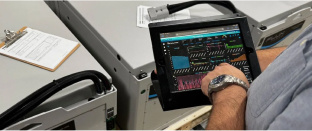
In practice, that means sensors on or inside the truck and battery continuously capture data points like state of charge, temperature, voltage, run time, idle time, and fault codes. That data is transmitted, usually over cellular or Wi-Fi networks, to a cloud-based dashboard. Instead of a technician walking the floor with a clipboard, a fleet manager can see the status of every truck in the operation from a laptop or phone.
The term "telemetry" comes from measuring something at a distance and that's exactly the value proposition. You don't need to be standing next to the forklift to know how it's performing.
How Does Fleet Telemetry Work?
At a basic level, telemetry systems are built on four layers:
1. Data capture. Sensors embedded in the electric forklift battery and, in more advanced systems, the truck itself, measure things like state of charge (SOC), state of health (SOH), temperature, charge cycles, and voltage fluctuations.
2. Transmission. That data doesn't just sit on the truck. It's sent, typically wirelessly, to a cloud platform in near real time. This is what separates modern telemetry from older systems that required someone to physically download data from the truck.
3. Aggregation and storage. The platform organizes incoming data from every asset in the fleet, building a historical record alongside live status. This is where patterns start to emerge which trucks are underperforming, which batteries are aging faster than expected, which shifts create the most strain.
4. Visualization and alerts. The raw data gets translated into something a fleet manager can actually use: dashboards, reports, and automated alerts when something falls outside normal parameters.
This is the core function of a modern energy management system; not just collecting data, but making it usable for day-to-day decisions.
Why Telemetry Matters More for Lithium-Ion Fleets
Telemetry isn't new to material handling. What's changed is the level of detail available since fleets shifted from lead-acid to lithium-ion battery technology.
Lead-acid batteries don't offer much insight into their own condition — you largely learn about problems after they happen. Lithium-ion batteries, by contrast, typically include a Battery Management System (BMS) that already tracks cell-level data internally. Telemetry platforms tap into that BMS data and surface it, which means fleet managers get visibility that simply wasn't possible with older battery chemistry.
That combination — lithium-ion's internal monitoring plus a telemetry layer on top — is what allows a forklift energy management system to move from reactive maintenance to something closer to predictive planning.
What Telemetry Data Actually Tells You
Some of the most useful outputs from a telemetry-equipped fleet include:
- Real-time state of charge across every truck, so you know which units are available and which need to charge before the next shift
- Battery health trends over time, flagging packs that are degrading faster than expected
- Utilization patterns, showing which trucks are overworked and which are sitting idle
- Fault and error codes, often before they become a full breakdown
- Charging behavior, including opportunity charging habits that can shorten battery lifespan if left unmanaged
None of this requires guesswork. It's pulled directly from the equipment.
The Business Case for Telemetry
The appeal of telemetry isn't the technology itself — it's what the visibility enables:
- Fewer surprise breakdowns. Seeing a battery's health decline over weeks gives maintenance teams a window to act before a truck goes down mid-shift.
- Better capital planning. Utilization and degradation data make it easier to justify (or delay) fleet expansion, rather than relying on anecdotal complaints.
- Improved uptime. Fleets using telemetry-driven energy management platforms have reported measurable gains here — Flux Power's SkyEMS platform, for example, has been associated with 10–30% uptime improvements for customers, along with up to 40% faster time-to-awareness on battery issues, since problems surface as they develop rather than after equipment fails.
- Accountability across shifts. With individual truck and operator-level data, it's easier to identify whether an issue is equipment-related or usage-related.
Telemetry Is a Tool, Not a Silver Bullet
It's worth being direct about this: telemetry doesn't fix a fleet's problems on its own. It surfaces information. Someone still has to look at the dashboard, interpret the trend, and act on it. A telemetry system paired with no process for reviewing alerts is just an expensive way to collect data nobody looks at.
The fleets that get the most value treat telemetry as an input to a maintenance and purchasing process — not a replacement for one.
Where Flux Power Fits In
Flux Power's lithium-ion batteries are built with telemetry in mind from the start, paired with SkyEMS, our fleet energy management platform, to give operations teams a direct line of sight into battery health, charging behavior, and fleet-wide performance. For teams evaluating a move from lead-acid, or looking to get more visibility out of an existing lithium-ion fleet, telemetry is usually where that conversation starts.
Want to see what fleet telemetry looks like in practice? Talk to a Flux Power specialist about SkyEMS.