







As industrial fleets seek higher uptime, lower operating costs, and stronger sustainability performance, lithium-ion batteries have become a proven replacement for traditional lead-acid systems. Unlike lead-acid, lithium-ion batteries enable opportunity charging, eliminate battery maintenance, improve safety, and provide real-time energy data that supports smarter operational decisions.
For fleet operators, the transition is not simply a battery upgrade. It’s a shift in how power is managed across vehicles, facilities, and shifts. Understanding total cost of ownership, charging strategy, infrastructure requirements, and battery intelligence is critical to unlocking the full value of lithium-ion technology. This guide outlines the key factors fleets should evaluate to ensure a successful, scalable transition from lead-acid to lithium-ion power.
For decades, lead-acid batteries have powered industrial fleets across material handling, logistics, manufacturing, and distribution. Today, rising demands for uptime, labor efficiency, safety, and sustainability are accelerating the shift to lithium-ion battery technology.
For fleet operators, transitioning from lead-acid to lithium-ion batteries is more than a technology upgrade—it’s a strategic move that impacts operations, infrastructure, and long-term cost control. Here’s what to know before making the switch to lithium-ion power for your fleet.
- Understand the True Cost of Lead-Acid Batteries
On paper, lead-acid batteries often appear less expensive upfront. In practice, their operational costs tell a different story. Lead-acid systems require:
- Battery changing rooms and spare batteries
- Labor for watering, cleaning, and equalization
- Downtime for charging and cooling cycles
- Ventilation and safety infrastructure
When these hidden costs are accounted for, lead-acid batteries can significantly reduce productivity, increase labor dependency, and consume valuable warehouse space. Lithium-ion systems eliminate many of these inefficiencies, enabling fleets to reclaim time, labor, and square footage.
- Charging Strategy Is a Game Changer for Fleet Uptime
Lead-acid batteries depend on long, uninterrupted charge cycles and scheduled battery swaps. Lithium-ion batteries operate differently, allowing opportunity charging throughout the day without degrading battery life.
Before transitioning to lithium-ion batteries, fleets should evaluate:
- How many shifts they run per day
- Where natural charging opportunities exist
- Power availability across facilities
A well-planned lithium-ion charging strategy can reduce the number of batteries required, simplify infrastructure, and keep vehicles in operation longer—without the need for battery change-outs.
- Lithium-Ion Infrastructure: Different, Not Bigger
A common misconception is that lithium-ion requires major facility upgrades. In reality, lithium-ion often reduces infrastructure complexity.
Key considerations include:
- Electrical capacity and charger placement
- Eliminating battery rooms in favor of distributed charging
- Reduced ventilation and cooling requirements
Because lithium-ion batteries are sealed and maintenance-free, they improve safety and cleanliness while simplifying compliance with facility standards.
- Battery Intelligence and Energy Data Matter
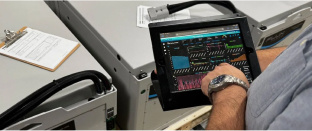
One of the biggest advantages of lithium-ion technology is data visibility. Modern lithium-ion systems are equipped with battery management systems (BMS) that provide real-time insights into:
- State of charge and state of health
- Temperature and performance trends
- Usage patterns across vehicles and shifts
This level of visibility allows fleets to move from reactive maintenance to proactive planning, helping operators maximize battery life, reduce downtime, and improve overall energy efficiency. Over time, battery intelligence becomes a foundation for optimizing energy usage, extending asset life, and supporting smarter operational decisions.
- Safety, Reliability, and Consistent Performance
Lithium-ion batteries designed for industrial applications incorporate multiple layers of protection, including thermal management, fault detection, and system-level safeguards.
Compared to lead-acid, lithium-ion:
- Eliminates acid spills and off-gassing
- Reduces manual handling risks
- Delivers consistent power output throughout the discharge cycle
For operators, this means safer facilities and more predictable vehicle performance—especially in demanding, multi-shift environments.
To learn more about Lithium-ion vs. Lead Acid, check out our free eBook: Lithium-ion vs. Lead Acid eBook
- Sustainability, ESG, and Long-Term Value
As sustainability goals become more central to business strategy, fleet electrification choices matter. Lithium-ion batteries support ESG initiatives by:
- Improving energy efficiency
- Reducing waste and water usage
- Supporting end-of-life recycling programs
Transitioning away from lead-acid is not just an operational upgrade, it’s a measurable step toward cleaner, more responsible operations.
- Plan the Fleet Power Transition—Don’t Rush It
Successful fleet transitions start with planning. Before replacing lead-acid batteries, fleets should conduct a full assessment of:
- Vehicle duty cycles
- Facility layout and power availability
- Operational goals and growth plans
Working with an experienced lithium-ion provider helps ensure the solution is properly sized, safely deployed, and scalable for the future.
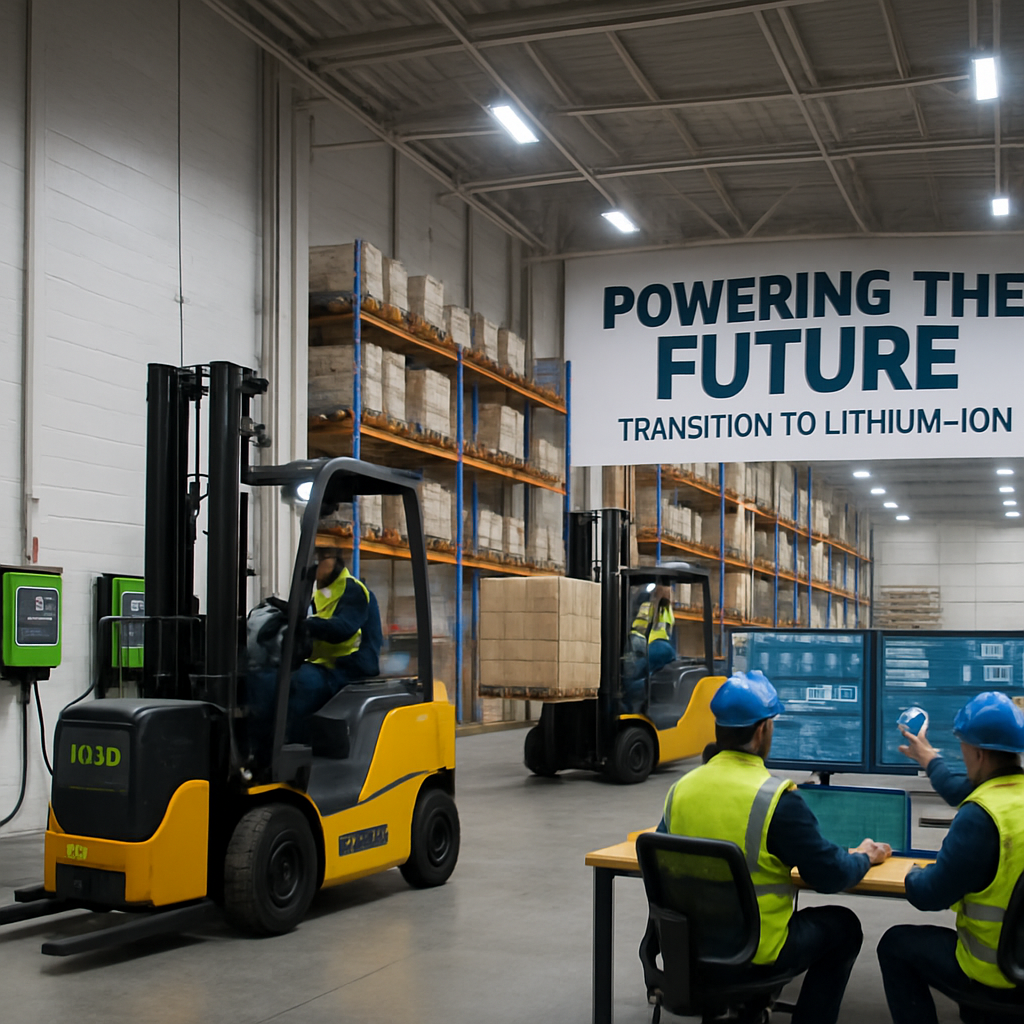
Powering the Next Era of Fleet Operations with Lithium-Ion
Replacing lead-acid batteries with lithium-ion is a strategic investment in fleet uptime, operational efficiency, and long-term resilience. Fleets that approach the transition with the right planning and industrial-grade lithium-ion technology gain more than improved batteries—they gain a smarter, safer, data-driven power platform designed to scale with their operations.
The future of fleet power is lithium-ion. The key is partnering with an experienced provider that understands real-world fleet demands and delivers solutions engineered for performance, safety, and longevity.
To learn more about how Flux Power can help, set up a ROI assessment with one of our Energy Experts: ROI Assessment