







Warehouses face growing demands for efficiency, safety, and uptime. Lead-acid batteries, long the standard for forklifts and material handling equipment, struggle to keep pace.
Lithium-ion batteries offer a solution: opportunity charging, consistent performance, minimal maintenance, and improved safety. This provides information around the operational, staff, and infrastructure changes involved in switching to lithium-ion batteries and highlights the total cost of ownership benefits and best practices for a smooth transition.
Why Warehouses Are Moving Beyond Lead-Acid Batteries
Lead-acid batteries were designed for a different era of warehousing; single-shift operations, dedicated battery rooms, and predictable schedules. Modern facilities operate very differently.
Challenges with lead-acid batteries include:
- Battery changing and downtime that interrupts workflows
- Dedicated battery rooms consuming valuable floor space
- Labor-intensive maintenance (watering, equalizing, cleaning)
- Performance drop-off as batteries discharges
- Safety and environmental risks from acid spills and off gassing
How Lithium-Ion Batteries Change Warehouse Operations
- Integrating Charging into Daily Workflow
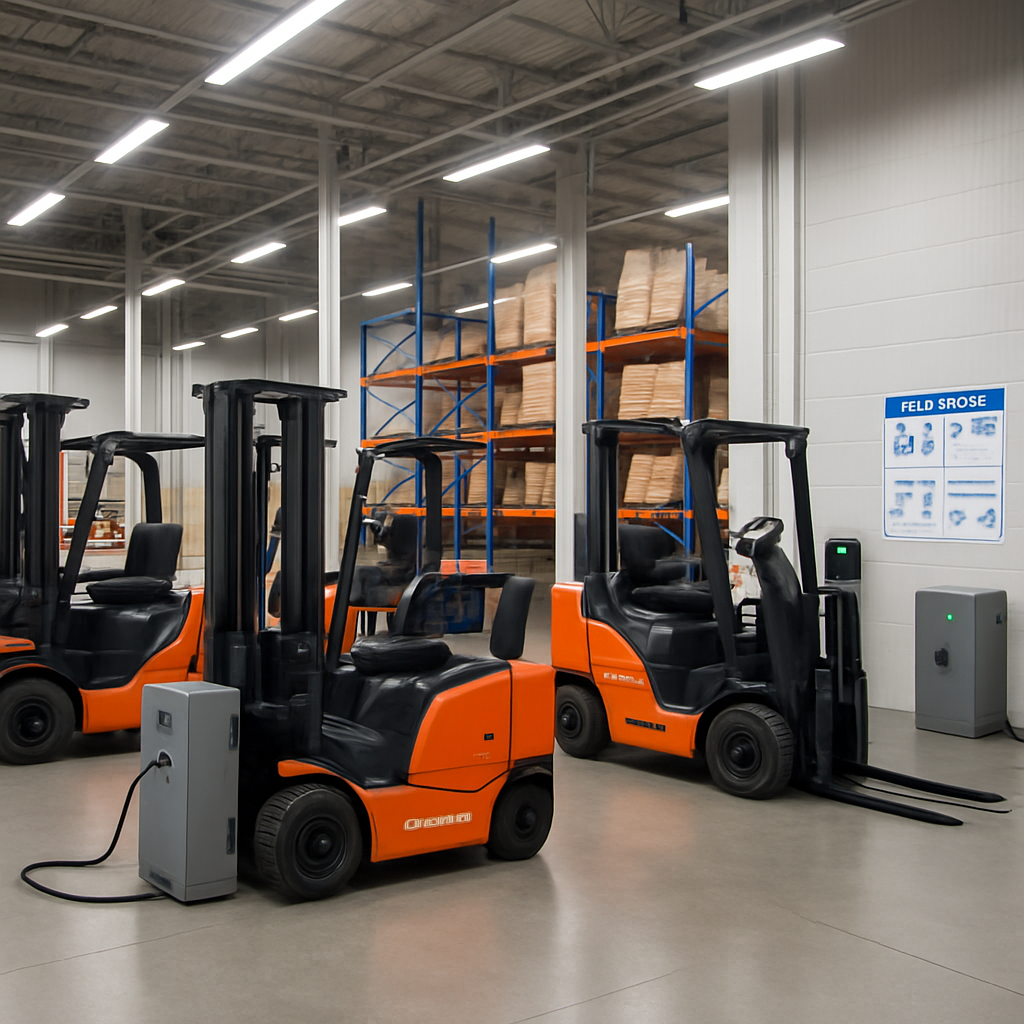
Lithium-ion batteries support opportunity charging, meaning operators can plug in during breaks, shift changes, or idle moments—without harming battery life.
- No battery swaps
- No scheduled cool-down periods
- Equipment stays in service for longer periods of time
- Consistent Performance Across Shifts
Lithium-ion batteries deliver steady voltage until near depletion, preventing forklifts from slowing down at the end of a shift and maintaining productivity.
- Virtually Maintenance-Free
Lithium-ion batteries are sealed systems which reduce labor and equipment downtime due to:
- No watering
- No acid handling
- No equalization cycles
Positive Impact on Warehouse Staff: Simplified Operator Training
Operators no longer need to:
- Change batteries
- Monitor water levels
- Handle heavy connectors or PPE
Training focuses on safe charging habits and system awareness.
Improved Safety
Lithium-ion systems increase safety at a warehouse by eliminating:
- Acid exposure
- Gassing during charging
- Heavy battery change-outs
Better Employee Experience
In addition to improved safety, equipment that performs consistently and workflows that are simplified can help to improve morale and adoption of standardized processes.
Infrastructure Considerations
Typically eliminated or reduced:
- Battery rooms
- Ventilation systems for gassing
- Battery change equipment
Typically required:
- Strategically placed charging stations
- Electrical capacity assessment
- Charging plans aligned to shift patterns
Evaluating Total Cost of Ownership
Lithium-ion batteries have a higher upfront cost, but generate overall savings from:
- Reduced labor for battery handling and maintenance
- Increased equipment uptime
- Extended battery lifespan (2–3× lead-acid)
- Less equipment wear from voltage drop
- Reclaimed warehouse space
Lithium-ion batteries can also provide an extended battery lifespan, commonly lasting two to three times longer than comparable lead-acid batteries. Payback can occur as quickly as two to three years, especially in multi-shift operations.
Data and Fleet Management
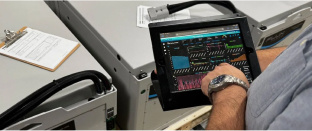
Modern lithium-ion systems, such as those engineered by Flux Power, include battery management and data capabilities. Flux Power’s SkyEMS provides:
- Real-time state-of-charge visibility
- Usage and charging insights
- Proactive maintenance alerts
- Smarter fleet and shift planning
Planning a Smooth Transition
- Assess fleet and duty cycles
- Evaluate electrical infrastructure
- Align charging strategy with operations
- Train staff early and clearly
- Roll out in phases if needed
Working with experienced partners like Flux Power ensures compatibility and minimizes disruption.
The Bottom Line
Switching from lead-acid to lithium-ion is more than an equipment upgrade. It is an operational advantage. Benefits include:
- Higher uptime
- Safer environments
- Simplified workflows
- Happier operators
- Better energy and cost control
Thinking about making the switch? Start by evaluating current battery operations. Partnering with a lithium-ion expert like Flux Power can help you build a transition plan that delivers measurable results from day one. To learn more or get an ROI analysis, contact Flux Power at: Learn More or Get ROI