







Lithium-Ion Batteries for 3-Wheel Electric Forklifts: What Fleet Managers Should Know
Overview: 3-wheel electric forklifts can run on lithium-ion batteries, and for multi-shift fleets there is a clear benefit. A properly matched lithium-ion pack delivers steady power through the shift, supports opportunity charging on breaks, and eliminates watering and battery swaps. The key is matching voltage, capacity, weight, and truck communication to your specific forklift. Flux Power's L-Series lithium-ion batteries for 3-wheel forklifts are built for exactly this application.
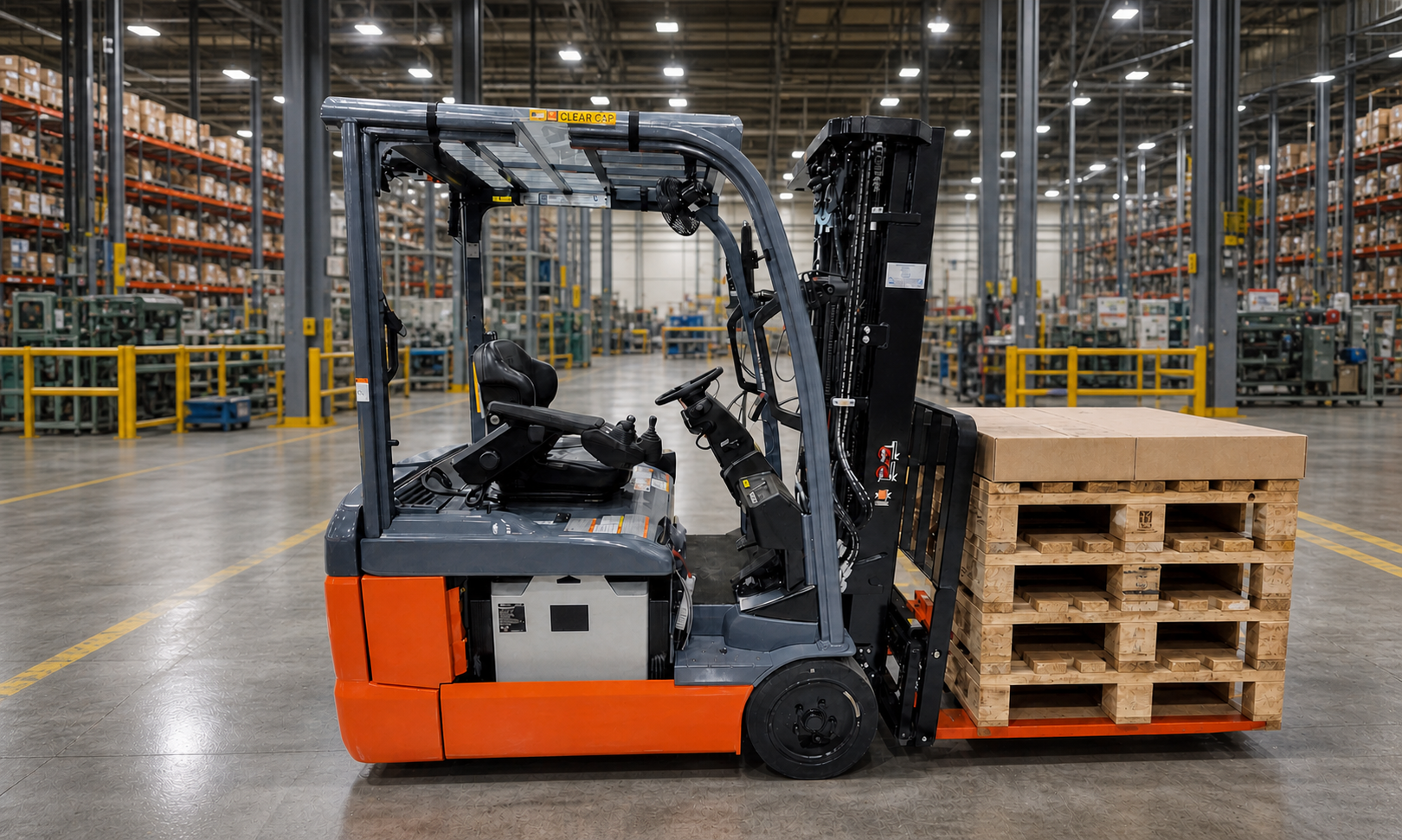
3-wheel counterbalance forklifts have become a workhorse of modern warehouses. Their tight turning radius lets operators work narrow aisles, crowded docks, and trailer loading zones that a 4-wheel truck can't reach as easily. But the battery behind that maneuverability often gets less attention than it should. Here's what fleet managers need to know before converting a 3-wheel fleet to lithium-ion.
Why 3-Wheel Forklifts Put Unique Demands on a Battery
A 3-wheel forklift asks a lot of its battery in a small space. Most units are Class I electric rider trucks, and some lighter-duty applications fall into Class II.
- Constant stop-and-go duty. Short, frequent moves, tight turns, and repeated lifts mean high current draw throughout the shift.
- The battery is part of the counterweight. On a counterbalance truck, battery weight helps keep the forklift stable. A replacement pack must meet the minimum battery weight on the truck's data plate.
- Fixed compartment size. The battery has to fit the existing compartment and connector with no modifications.
- Multi-shift schedules. Many 3-wheel trucks run two or three shifts in distribution, retail, food and beverage, and manufacturing operations.
Where Lead-Acid Batteries Fall Short
Lead-acid has powered forklifts for decades, but it creates real costs in high-use 3-wheel fleets:
- Voltage drop-off. As a lead-acid battery discharges, voltage sags. Operators feel slower travel and lift speeds late in the shift.
- Battery swaps. Multi-shift fleets often need two or three batteries per truck, plus a battery room, changing equipment, and labor to swap them.
- Maintenance. Watering, equalizing, cleaning acid residue, and monitoring for damage all take time.
- Long charge and cool-down cycles. Lead-acid typically can't be topped up on breaks without shortening its life.
What Lithium-Ion Changes for 3-Wheel Fleets
|
Factor |
Lead-acid |
Lithium-ion (LiFePO4) |
|
Power through the shift |
Sags as charge drops |
Consistent until near empty |
|
Charging |
Full cycle plus cool-down |
Opportunity charge on breaks and lunches |
|
Batteries per truck (multi-shift) |
Often 2–3 |
Typically 1, stays in the truck |
|
Routine maintenance |
Watering, equalizing, cleaning |
No watering or equalizing |
|
Battery room |
Usually required |
Not needed for swaps |
|
Visibility |
Manual checks |
Real-time telematics (e.g., SkyBMS) |
Flux Power data shows lithium-ion forklift batteries deliver up to 3X longer cycle life, up to 50% more energy efficiency, and up to 40% lower total cost of ownership compared with lead-acid. Results vary by application, which is why an ROI review is worth doing before conversion.
What Fleet Managers Should Evaluate Before Converting
- Voltage. Match the battery to the truck. Most 3-wheel forklifts run on 36V or 48V systems. Check the data plate.
- Usable energy (kWh), not just amp-hours. Compare usable kWh to your shift profile: hours of operation, lift height, load weight, and travel distance.
- Weight and fit. Confirm the pack meets minimum counterweight requirements and fits the compartment. Look for weight adaptors designed for this.
- Truck integration. CAN communication lets the battery talk to the forklift for accurate state-of-charge display and safe low-charge behavior. OEM approval matters here.
- Charging plan. Map breaks, lunches, and shift changes to opportunity-charging windows. Confirm charger compatibility.
- Operating environment. Cold storage and freezer work need batteries rated for low temperatures, ideally with integrated heaters.
- Safety certification. Look for UL 2580 listing and LiFePO4 chemistry, which is known for strong thermal stability.
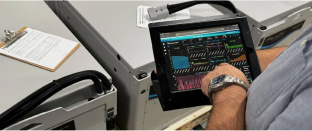
- Fleet data. Telematics should show charge levels, temperature, and usage so you can right-size the fleet and catch issues early.
For a broader look at battery selection, see How to Choose the Right Forklift Battery.
How the Flux Power L-Series Fits 3-Wheel Forklifts
The Flux Power L-Series is purpose-built for 3-wheel counterbalance forklifts in Class I and Class II applications. It comes in two configurations:
|
Spec |
L48 |
L36-G2 |
|
Voltage (nominal) |
48V (51.2V) |
36V (38.4V) |
|
Capacity |
630Ah |
630Ah |
|
Usable energy |
Up to 32.3 kWh |
Up to 24.2 kWh |
|
Continuous discharge |
— |
Up to 300A |
|
Cycle life |
3,000+ cycles at 80% DoD |
3,000+ cycles at 80% DoD |
|
Operating temperature |
-22°F to 131°F (-30°C to 55°C) |
-22°F to 131°F (-30°C to 55°C) |
Both packs share the features fleets need most:
- LiFePO4 chemistry, UL 2580 Listed and IP rated
- Integrated heaters and precision cooling for cold storage and warm environments
- Weight adaptors to meet counterweight requirements
- Integrated BMS with CAN communication for seamless truck integration
- Opportunity charging for multi-shift operations
- SkyEMS telematics for real-time monitoring of charge, temperature, and usage through Flux Power's energy management solution
L-Series packs are OEM approved and assembled in Flux Power's ISO 9001:2015 certified facility in Vista, California, with remote and onsite product support.
Where 3-Wheel Lithium Conversions Pay Off Most
- Warehouse and distribution: multi-shift picking and dock work without battery swaps
- Food and beverage and cold storage: reliable performance at low temperatures with no acid spills
- Retail and e-commerce: peak-season volume with fewer trucks idle for charging
- Manufacturing: consistent power for line-side delivery
Next Step: Size the Right Battery for Your Fleet
Every 3-wheel fleet has a different duty cycle. Flux Power can review your trucks, shifts, and charging windows to recommend the right L-Series configuration and estimate your savings
- Explore the L-Series lithium-ion batteries for 3-wheel forklifts
- Estimate your ROI with an expert
- Try before you convert through the Demo Battery Program
FAQ section
Can you put a lithium-ion battery in a 3-wheel forklift? Yes. Most 3-wheel electric forklifts can convert to lithium-ion as long as the pack matches the truck's voltage, compartment size, minimum battery weight, and connector. Flux Power's L-Series is designed specifically for 3-wheel counterbalance forklifts in Class I and Class II applications.
What voltage do 3-wheel forklifts use? Most 3-wheel electric forklifts run on 36V or 48V systems. Check the truck's data plate. The Flux Power L-Series comes in 36V (38.4V nominal) and 48V (51.2V nominal) versions.
What is the difference between the L48 and the L36-G2? The L48 is a 48V pack delivering up to 32.3 kWh of usable energy. The L36-G2 is a 36V pack delivering up to 24.2 kWh and supports up to 300A continuous discharge. Both are 630Ah.
How long does a lithium-ion 3-wheel forklift battery last? The L-Series is rated for 3,000+ cycles at 80% depth of discharge, which is significantly longer than a typical lead-acid battery.
Do I need a battery room or spare batteries with lithium-ion? In most multi-shift operations, no. Lithium-ion supports opportunity charging during breaks and shift changes, so one battery can stay in the truck all day instead of being swapped.
Will a lithium battery affect my forklift's counterweight? It shouldn't, if the pack is designed for your truck. The battery must meet the minimum weight on the forklift's data plate. L-Series packs include weight adaptors to meet counterweight requirements.
Can lithium-ion 3-wheel forklift batteries work in cold storage? Yes. L-Series batteries operate from -22°F to 131°F (-30°C to 55°C) and are available with integrated heaters for cold storage and freezer applications.
Are lithium-ion forklift batteries safe? The L-Series uses lithium iron phosphate (LiFePO4) chemistry, known for strong thermal stability, and is UL 2580 Listed. Unlike lead-acid, there is no acid to spill and no routine watering.
How do I monitor lithium batteries across my fleet? Flux Power's SkyBMS telematics provides real-time data on charge levels, temperature, and usage, so fleet managers can optimize uptime and plan charging.
How do I know if converting my 3-wheel fleet is worth it? Start with an ROI review of your trucks, shifts, and charging windows. Flux Power offers ROI estimates with an expert and a Demo Battery Program so you can test before converting.